
Book an Appointment
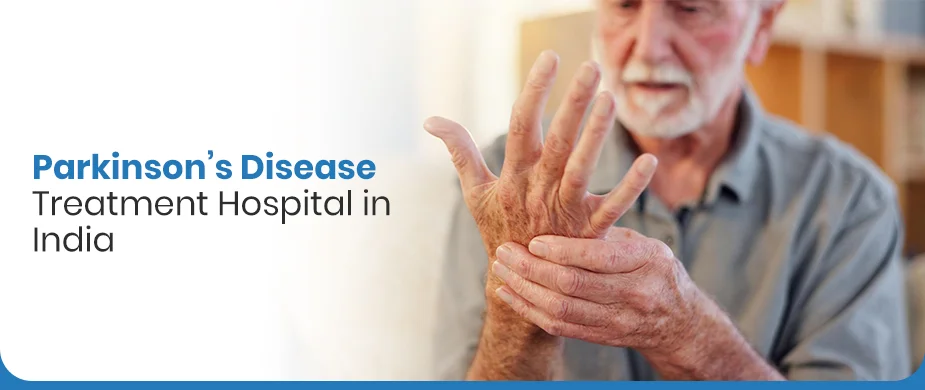
Call Us09958011121Parkinson’s Disease Treatment Hospital in India
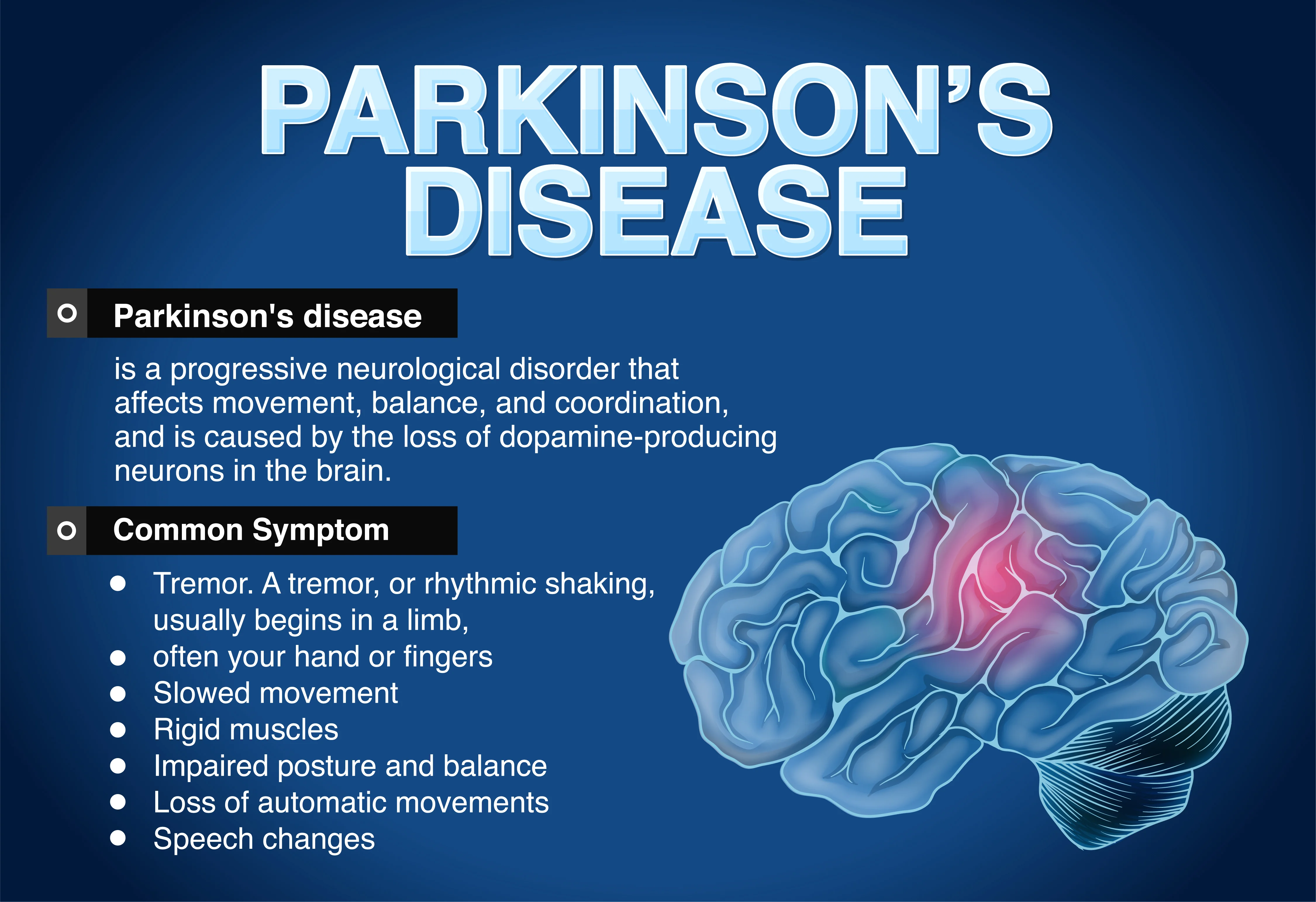
Parkinson's disease is a type of movement disorder and an age-related degenerative brain condition, meaning it drives parts of your brain to deteriorate. It occurs when nerve cells in the brain don't produce enough of a brain chemical known as dopamine.
If not managed, on its own, Parkinson's disease worsens over time. This age-related degenerative brain condition causes motor issues like tremors, rigidity, and balance problems, leading to falls, fractures, and difficulty with daily activities. The additional complications include cognitive impairment, dementia (Parkinson's dementia), severe sleep disorders (like acting out dreams), depression, and anxiety.
Although Parkinson's disease can't be cured, with treatment under healthcare professionals, like at IBS Hospital (known for its best Parkinson's Disease Treatment Outcome), symptoms can be managed better.
Parkinson’s Disease Treatment at IBS Hospital Delhi comes with advanced technology, like Deep Brain Stimulation (DBS), Cyberdyne robotic rehabilitation (HAL), and Navigation-Guided Surgery. This helps us to provide you with precise treatments and enhanced recovery for movement disorders.
Our experts, like Dr. Sanjay Kumar Choudhary with 25 years of experience, are known for their care, keen attention to detail, and commitment to excellence for major neurological conditions.
Contact Us Now for Parkinson’s Disease Treatment
How Parkinson’s Disease Causes Movement Issues
IBS Hospital Delhi (a Parkinson's and tremor treatment hospital) says, understand the reason for movement issues in 3 simple steps."
1. Dopamine Deficiency
Dopamine is a key neurotransmitter that helps the basal ganglia (a brain area for movement) function correctly. This means dopamine is crucial for smooth, controlled body movement.
In Parkinson’s, there is a lack of dopamine, meaning the brain can't properly communicate with your muscles.
2. Neuronal Loss Mechanism
Nerve cells in the brain area for movement (the substantia nigra) gradually die off due to reduced dopamine production.
3. Imbalanced Brain Chemistry | Basal Ganglia Imbalance
Reduced dopamine disrupts the normal brain basal ganglia activity, leading to movement issues.
Read Also: Exploring Parkinson's Disease Types and Modern Treatments
When to Consult the Doctor | Parkinson’s Symptoms
Consult your doctor for timely treatment if you experience the following symptoms:
The key motor symptoms (TRAP):
- Tremor: This may involve shaking, especially when resting.
- Rigidity: This includes stiffness in limbs, trunk, or face.
- Akinesia or Bradykinesia: This can be identified by slowness of movement, difficulty starting, and a shuffling walk.
- Postural Instability: Issues in balance and frequent falls.
Other indicative signs are
- Parkinsonian gait (a tendency to lean forward, taking small, quick steps as if hurrying (called festination))
- Speaking quietly, monotone, or hesitating
- Excessive daytime sleepiness
- Depression, anxiety, apathy, and other emotional issues
- Unexplained balance issues
Read Also: How to Manage Parkinson’s Symptoms Effectively
Parkinson’s Disease Treatment at the Best Hospital, Delhi
Long-term Parkinson's complications are worsening motor issues like freezing and falls, dementia (common in later stages), severe constipation, sleep disorders, psychosis, hallucinations, depression, or anxiety; hence, timely treatment becomes crucial.
Key factors influencing treatment include:
- Age at onset
- Stage and severity of disease
- Motor (tremor, slowness) vs. Non-Motor Symptoms (dementia, depression, or sleep disorders)
- Response to medication
- Adherence to the consistent treatment and personalized rehabilitation
There is no singular "permanent cure" for the brain nerve damage that happens with Parkinson’s disease and treatment cannot reverse the irreversible loss of dopamine-producing neurons in the substantia nigra.
The multidisciplinary team at IBS Hospital (a Parkinson's and tremor treatment hospital) focuses on managing symptoms by replacing dopamine or modulating brain activity.
Here are the key Parkinson’s disease treatments:
1. Medication
Controls Parkinson's symptoms, primarily movement disorders like tremors and stiffness.
Medicine improves dopamine levels or mimics its effects in the brain.
3. Deep Brain Stimulation (DBS)
A surgical option where electrodes are implanted in the specific brain areas, like the subthalamic nucleus, to deliver electrical pulses. This helps regulate abnormal brain activity, lowering motor symptoms unresponsive to drugs.
DBS is generally considered a low-risk, safe and effective treatment for movement disorders like tremor and dystonia.
4. Neuromodulation
Neuromodulation involves modifications of nerve activity by directly applying electrical, chemical, or magnetic stimuli.
Uses non-invasive techniques to ease tremors and dyskinesia with fewer side effects.
5. Rehabilitation Therapies
Healthcare professionals at IBS hospital develop personalized therapy, which involves physical, occupational, and speech therapies. This helps improve and enhance mobility and daily function, utilizing advanced tech like Cyberdyne's HAL robotic exoskeletons.
6. Psychological Support
Counseling and support to patients and families are provided to address depression and behavioral changes.
Read Also: Living with Parkinson's: Tips to manage daily challenges
Parkinson's Disease Treatment Cost
The cost may vary, as it is based on various factors like
- Disease stage
- Essential therapies (physical, occupational, speech)
- Prescribed medications
- Need for advanced interventions like Cyberdyne's HAL robotic exoskeletons, Deep Brain Stimulation (DBS), etc.
- Hospital type
- Specialist fees
- Location
- Other indirect costs
Here is the general cost
| Treatment | Approx. Cost (INR) | Approx. Cost (USD) |
| Medication (Annual) | ₹50,000 – ₹8,20,000 and more | $600 – $9,800 and more |
| DBS Surgery | ₹7 Lakhs – ₹25 Lakhs and more | $8,500 – $30,000 and more |
| Physiotherapy (Monthly) | ₹10,000 – ₹20,000 and more | $120 – $240 and more |
Best Parkinson's Hospital | IBS Hospital
IBS Hospital provides personalized care through a multidisciplinary team of neurologists and surgeons, focusing on symptom control and improving quality of life at all stages of Parkinson's disease.
We are backed by advanced neuromodulation and holistic rehabilitation techniques for optimal symptom control. Our treatments are based on the core principle of “brain neuroplasticity,” your brain's ability to rewire itself to form new neural connections using physical therapy, technology (like robotics), and consistent practice.
Watch the patient recovery stories here.
Looking for the best Parkinson’s and tremor (movement disorder) treatment hospital in India? You can contact the IBS hospitals at +91 8929766796.
Our Address: IBS Hospitals, 73 Ring Road, Lajpat Nagar 3 New, Delhi - 110024, India
FAQs
Q1: What does recovery look like after Parkinson’s treatment?
A: There is no permanent cure; however, holistic care gives optimal recovery, which feels or looks like enhanced mobility, decreased tremors, better independence, and improved quality of life, with a gradual return to activities.
Q2: What do people say about our IBS hospital’s Parkinson’s treatment methods and outcomes?
A: People say advanced technologies at IBS hospital, like Deep Brain Stimulation (DBS) and advanced rehabilitation, are highly effective. They have experienced significant improvements in the quality of life for patients because of better symptom management.
Q3: What is the best thing to do for Parkinson's disease?
A: The best thing to do for Parkinson's disease is to follow a combination of techniques as curated by your doctor. The best approach may include Medications, the Mediterranean diet, supportive therapies, and Deep Brain Stimulation (DBS) for advanced cases.
Q4: What is the latest Parkinson's treatment?
A: The latest Parkinson's treatment includes Adaptive Deep Brain Stimulation (DBS) for better symptom control. IBS uses DBS technology in its Parkinson’s disease treatment plan.
This content is medically reviewed by the IBS Hospital Team, a trusted healthcare provider in diagnosing and managing neurological conditions. All content is medically reviewed to ensure reliability and clinical accuracy.
This content is for informational use only. Contact your doctor for the right Parkinson’s Disease-related care.
 By -Dr Aaksha Shukla |
January 22, 2026 | 9 Min Read
By -Dr Aaksha Shukla |
January 22, 2026 | 9 Min Read
Cervical Spondylotic Myelopathy: Symptoms, Diagnosis & Surgery
Advanced Neuro Rehabilitation for Cerebral Palsy & Brain Disorders
What Is Cerebral Palsy? Symptoms, Diagnosis & Treatment for Children
Febrile Seizures in Children: What Every Parent Should Know
Brain Aneurysm Treatment in Delhi NCR: Symptoms, Surgery & Recovery
Monsoon Migraine Triggers in 2026: Why Headaches Increase During the Rainy Season
Deep Brain Stimulation Surgery in Delhi for Parkinson’s Tremors
Spine Surgery in Delhi NCR: When is Surgery the Best Option?
Stroke Risk in Summer (2026): How Heat & Dehydration Affect the Brain
Minimally Invasive Brain Surgery: Benefits, Procedure & Recovery
Lower Back Pain: Causes, Symptoms & Non-Surgical Treatments
Slip Disc (Herniated Disc): Symptoms, Causes & Treatment Options
What Is Neuromodulation Therapy? Types, Benefits & How It Works
Headache Reasons: Causes of Left Side & Right Side Headache Explained
Home Remedies for Headache: 10 Natural Ways to Get Relief Fast
Brain Stroke Treatment Hospital – Emergency Care
Stroke Paralysis Treatment Hospital – Advanced Neuro Care
Paralysis Treatment Hospital in India – Cost & Recovery
Brain Infection Symptoms, Causes, and When to Seek Emergency Care