


Book an Appointment
Call Us09958011121Is Spine Surgery Right for You? Here’s How to Know
For millions of people around the world, back pain is a daily reality. Usually, muscle injuries are the cause, but sometimes the spine is to blame. Estimates say, back problems are among the most common causes of disability around the world.
If you've been experiencing chronic pain in your back, you've undoubtedly wondered: Is spine surgery essential? The pain may be intermittent or severe enough to make even the simplest of activities painful, such as sitting, sleeping, or walking. Some may experience a dull and persistent pain, while others may feel an excruciating, shooting, searing, or stabbing pain that runs down the spine and into the legs.
You consult friends, family, and doctors, but no matter what you do, the problem persists. Surgery is something that many people would rather not think about because of the anxiety it might cause.
Scroll down to explore in what situations conservative treatments are enough to manage back pain. And when is the right time to consider spine surgery for back pain?
Read Also: Top 10 Spine Surgeons In Delhi
When Does Spine Surgery Become Necessary?
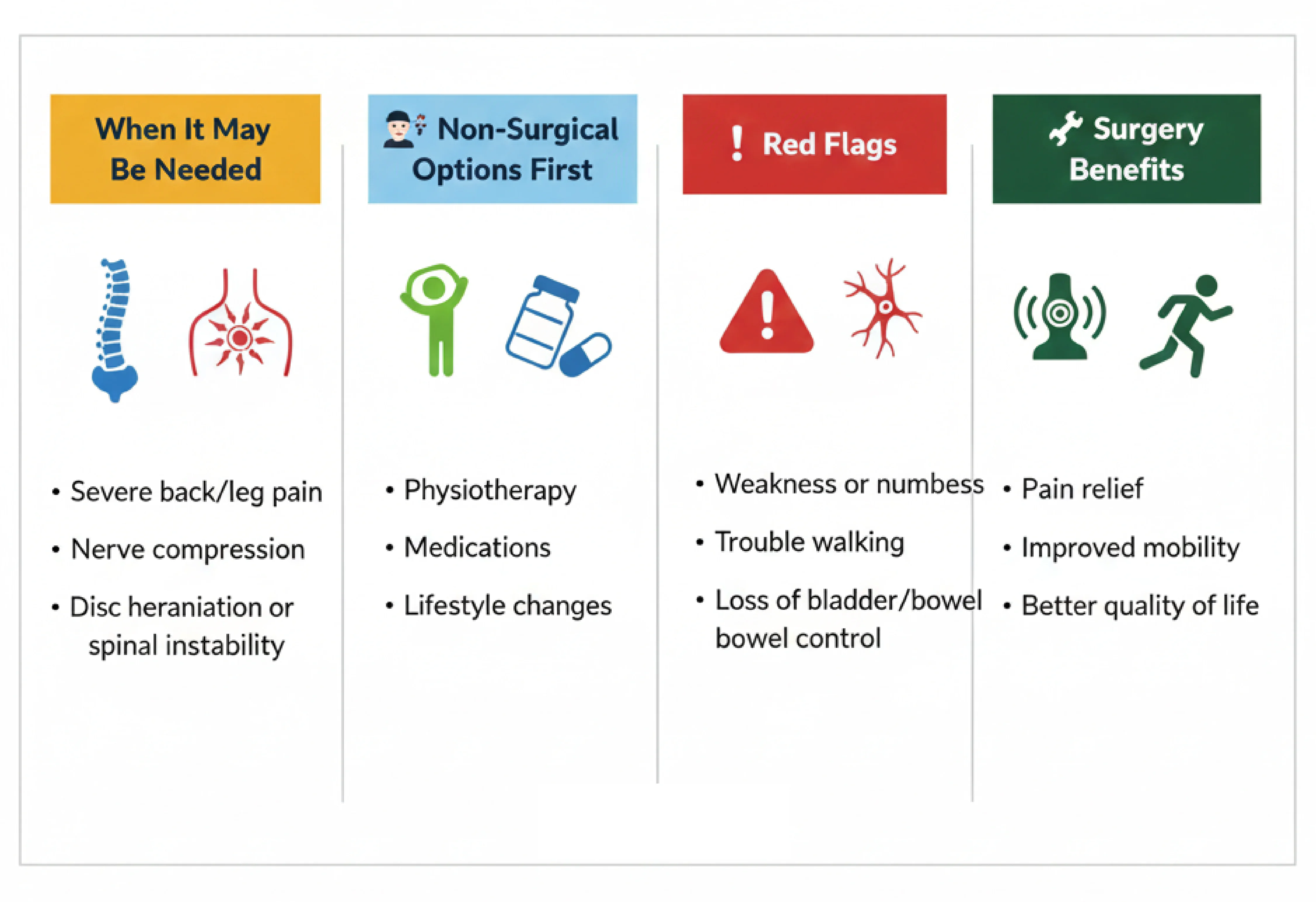
Many people seek medical attention for back pain, and for the majority, conservative treatments like physical therapy and anti-inflammatory medications are enough to alleviate the discomfort. However, surgical intervention may be necessary for the correction of spinal deformities, infections, injuries, tumors, and degenerative spine disorders such as stenosis and herniated disks.
Read Also: Spine Surgery: Who Can Benefit from It
Types of Techniques for Spine Surgery
The choice of technique for performing spine surgery depends on the type of disorder and the overall health status of the patient. These techniques are:
- Open surgery: An open (conventional) spine surgery approach, in which an incision is made along the backbone, is an effective surgical option that the spine surgeon may choose. In order to reach the spinal bones and the spinal cord, the surgeon first needs to separate the soft tissues and muscles.
- Minimally invasive spine surgery: In minimally invasive spine surgeries, the surgeon makes a tiny incision and inserts a tube to access the spine. The equipment used in these procedures is small and precise. These techniques result in appreciable reductions in recovery time and complications.
- Robotic spine surgery: During robotic spine surgery, a tracking system similar to GPS can help the surgeon restore a broken or malformed spine by precisely placing screws and other implants.
Read Also: A Closer Look at Types of Spine Surgery
Common Spine Conditions Causing Back Pain & Type of Surgery Needed
| Condition | Description | Type of Spine Surgery Need |
| Slipped Disk (Herniated Disc) | When the disk between the vertebrae ruptures or rips, it puts pressure on the nerves, which can lead to limb pain, numbness, or tingling. | Disk surgery—if exercise and painkillers fail to remove pressure on the nerve. |
| Spinal Stenosis | Back discomfort, tingling, numbness, or weak muscles happen due to narrowed spinal spaces and bone pressing on nerves. | Decompression spine surgery—space for the nerves is enhanced only if symptoms are severe. |
| Tumor | Cancer or non-cancerous growths in the spine can cause pain, numbness, weakness, or paralysis in the back. | Tumor surgery—the tumor is surgically removed or reduced to relieve the pressure. |
| Scoliosis | The lateral bending of the spine, which generally begins in childhood, can get worse with time and cause issues. | Corrective spine surgery—bending correction—is done only if the curve progresses and causes pain or functional issues. |
| Kyphosis | Forward bending of the spine due to cracked or compressed vertebrae. | Spine correction surgery—bending correction is done only in severe cases to reduce pain and restore posture. |
| Spinal Cord Injury | Accidents like falls or crashes may result in bruises to the spinal cord. It can also result in cessation of the blood supply. | Stabilization surgery—done to prevent further damage to the spinal cord and restore its blood supply. |
| Broken Neck or Back | Trauma or bone weakening can cause vertebrae to fracture, damaging the spinal cord. | Fixation surgery—broken bones are stabilized using braces, screws, or rods. |
| Spondylolisthesis | Aging or sports-related stress are common causes of this condition. It happens when a vertebra slips out of position. | Spinal fusion—done to reposition the vertebra only if rest fails to alleviate the pain. |
| Cauda Equina Syndrome | Leg weakness and loss of bladder or bowel control may happen due to increased pressure on nerves in the lower back. | Emergency surgery—done to restore nerve function as an emergency procedure. |
| Syringomyelia | Inside the spinal cord, a fluid-filled cyst develops and has the potential to enlarge. | Surgery to drain or correct—the cyst is surgically removed to prevent further spinal cord damage if symptoms worsen. |
Read Also: What is Minimally Invasive Spine Surgery?
How to Prepare for Spine Surgery?
Depending on your age and general medical fitness, your surgeon may ask you to have a checkup (clearance) with your family doctor or another doctor you see regularly, such as a cardiologist.
If you smoke or use smokeless tobacco, you should quit this habit months before surgery, as nicotine increases the risk of wound infection and delays bone healing. Inform your surgeon about any nicotine use, including patches. Some medications, such as blood thinners, NSAIDs, and certain supplements, may need to be stopped before surgery. Blood donation is usually not required, but planning help at home and arranging transportation after surgery is important.
On the day of surgery, you will meet the anesthesia team, discuss your medical history, and finalize the type of anesthesia so you are comfortable and well prepared.
Read Also: Spine Surgery Cost In Delhi, India
Conclusion
Most likely, a spinal disorder won't affect your daily life in any noticeable way. However, pay close attention to any type of back or leg pain. If you suddenly can't control your movements or feel weakness or numbness in your limbs, tell your doctor right away. Do not delay, particularly if you have a history of cancer or persistent pain that doesn't improve with rest, is not associated with physical work, is more severe at night, or doesn't respond to physical exertion.
Do I need spine surgery? Which spine surgery is right for me? Get personalized solutions from the top spine surgeons in Delhi at IBS Hospitals. Book your consultation now!
FAQs
Q1. Does every back or leg pain require surgery?
A: No. Medication, physiotherapy, rest, and behavioral modifications alleviate the majority of back pain. When pain is unbearable, associated with a nerve, and not responding to non-surgical treatments, surgical intervention is planned.
Q2: Is spine surgery a high-risk procedure?
A: As with any surgical procedure, there are inherent risks; however, advances in modern techniques and meticulous planning have significantly enhanced the safety of spine surgery compared to previous practices.
Q4. How do doctors decide if surgery is necessary?
A: Before suggesting surgery, doctors consider your symptoms, scan results, reaction to noninvasive treatments, and the severity of the problem's impact on your daily life.
 By -Dr Aaksha Shukla |
December 23, 2025 | 9 Min Read
By -Dr Aaksha Shukla |
December 23, 2025 | 9 Min Read
Cervical Spondylotic Myelopathy: Symptoms, Diagnosis & Surgery
Advanced Neuro Rehabilitation for Cerebral Palsy & Brain Disorders
What Is Cerebral Palsy? Symptoms, Diagnosis & Treatment for Children
Febrile Seizures in Children: What Every Parent Should Know
Brain Aneurysm Treatment in Delhi NCR: Symptoms, Surgery & Recovery
Monsoon Migraine Triggers in 2026: Why Headaches Increase During the Rainy Season
Deep Brain Stimulation Surgery in Delhi for Parkinson’s Tremors
Spine Surgery in Delhi NCR: When is Surgery the Best Option?
Stroke Risk in Summer (2026): How Heat & Dehydration Affect the Brain
Minimally Invasive Brain Surgery: Benefits, Procedure & Recovery
Lower Back Pain: Causes, Symptoms & Non-Surgical Treatments
Slip Disc (Herniated Disc): Symptoms, Causes & Treatment Options
What Is Neuromodulation Therapy? Types, Benefits & How It Works
Headache Reasons: Causes of Left Side & Right Side Headache Explained
Home Remedies for Headache: 10 Natural Ways to Get Relief Fast
Parkinson’s Disease Treatment Hospital in India
Brain Stroke Treatment Hospital – Emergency Care
Stroke Paralysis Treatment Hospital – Advanced Neuro Care
Paralysis Treatment Hospital in India – Cost & Recovery
Brain Infection Symptoms, Causes, and When to Seek Emergency Care