


Book an Appointment
Call Us09958011121Brain Health at Every Age: Preventive Neurology Tips
Every aspect of our lives depends on the efficiency of our brain functioning—from thinking and learning to remembering and working. But we rarely consider how well we nurture our brains. Most people only visit a neurologist when a problem appears. Preventive neurology looks at things differently. The goal is to maintain brain health before complications knock you.
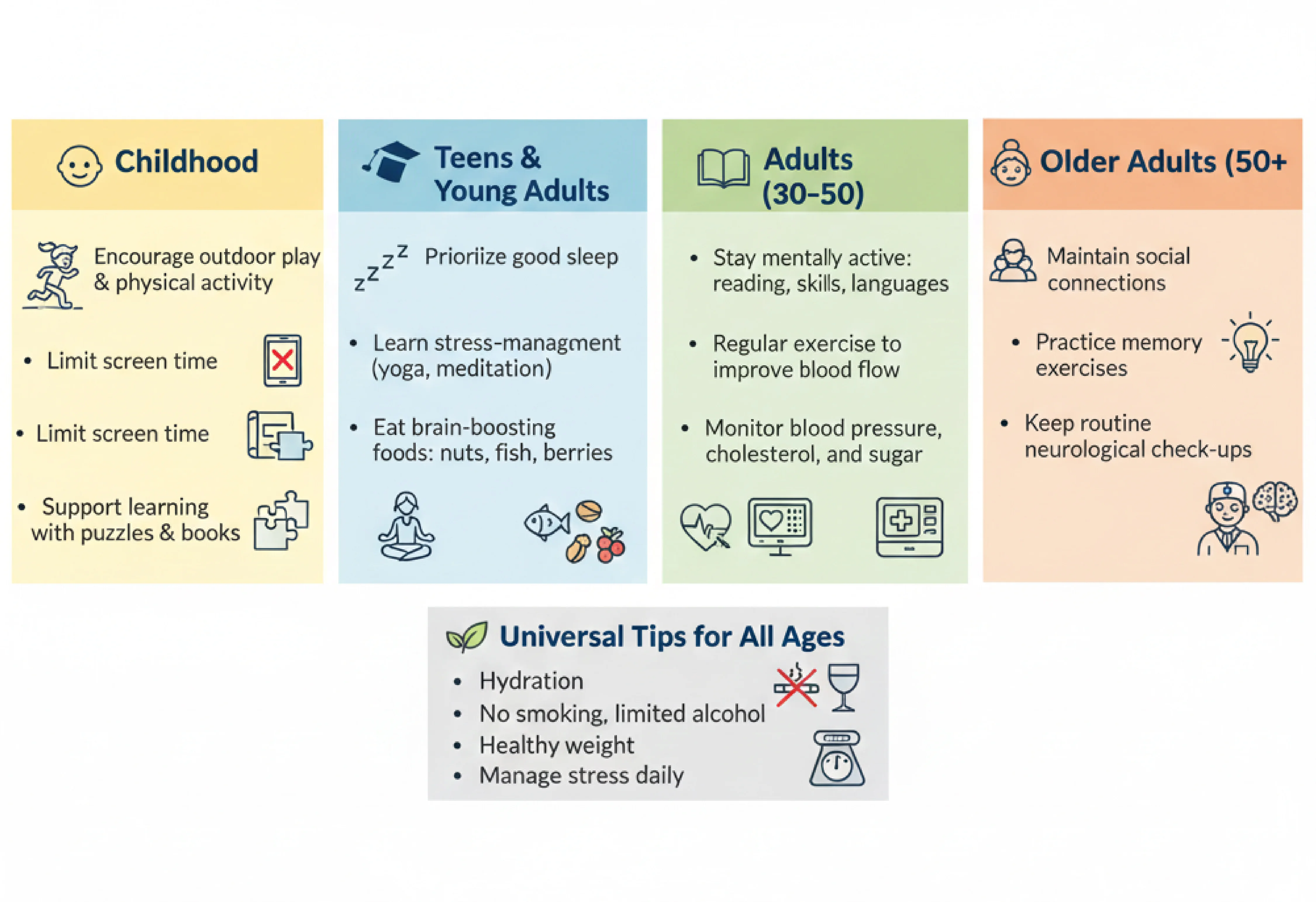
Maintaining a healthy brain does not end at a specific age. How our brain develops and adapts throughout life is heavily influenced by the habits we form in childhood and the lifestyle we choose as we become older. Simple steps like staying mentally active, sleeping well, managing stress, and addressing small symptoms early can help protect brain health and support a better quality of life at every stage.
Read Also: 10 Brain-Boosting Foods to Enhance Memory and Cognitive Health
Why Is Maintaining Brain Health Important?
Although the brain weighs only 3 pounds, it possesses immense power. Those 3 pounds reflect your personality and all of your memories. The brain controls your ideas, emotions, involuntary actions, and behaviors.
The brain's billions of nerve cells work together to enable all of your behavior. These brain cells, known as neurons, transmit information throughout the body. If they fail to function properly, your muscles may move abnormally. You can lose sensation in certain portions of your body. These issues could potentially impact your ability to think.
The brain does not repair neurons that have been damaged. So it's critical to look after them. Head traumas, illicit drug consumption, and medical conditions like Alzheimer's and Parkinson's disease can all lead to damage or loss of brain cells.
Read Also: Early Warning Signs of Brain Tumor and When to Seek Help
Brain Health Tips for All Ages
Adopting habits to maintain brain health is an important approach to leading a healthy and long life. It involves taking safety precautions to prevent brain cell damage and keeping your brain active and engaged in productive activities. Try these brain-health tips:
| Brain Health Tips | Detailed Explanation |
| Stay physically active | Physically active people are more likely to have sharp minds. When you exercise on a regular basis, you boost your mood, vitality, flexibility, strength, and balance. There is scientific evidence that physical activity can reduce the likelihood of getting Alzheimer's disease as age advances. The average healthy adult should engage in 75 minutes of strenuous aerobic activity per week. |
| Safeguard your head from injuries. | Following a brain injury, the trouble with cognition, memory, movement, speech, and emotion may persist for a long time. When riding a bike, skiing, horseback riding, motorcycling, snowmobiling, or driving a vehicle, you must wear a helmet to prevent brain injuries. People often suffer brain injuries in accidents like car collisions and falls. You can lower your risk by taking precautions like wearing a seatbelt, being careful on ladders and uneven ground, and staying alert in unfamiliar locations. At home, you can prevent falls by removing clutter from stairs and hallways, keeping stairways well-lit, and securing carpets and rugs firmly. |
| Manage your medical conditions properly. | Medical conditions like diabetes, heart disease, and high blood pressure can increase the risk of stroke, which damages blood vessels in the brain. Try managing such issues effectively by lifestyle modifications and taking medicines as suggested by your doctor. |
| Stay socially active | An active social life enhances your brain health. Depression and stress exacerbate memory loss. Social engagement helps in preventing both these conditions. An increased risk of cognitive decline and Alzheimer's disease has been associated with feelings of loneliness and social isolation. Spending quality time with your friends and family can improve brain health. |
| Have a sound sleep at night. | The brain is like a phone: it needs time to charge while you sleep. Getting a good night's sleep enhances memory, attentiveness, and cognitive performance. Additionally, sleep lowers stress levels. Seven to nine hours of sleep every night is recommended for adults. It also slows down cognitive decline and dementia. |
| Eat a nutritious diet. | Research suggests that a balanced diet may help manage or delay dementia symptoms. Research indicates that the MIND diet can help keep your brain healthy by slowing down memory loss and improving focus. Fruits, nuts, seeds, legumes, poultry, shellfish, and vegetables are the mainstays of this diet plan. Such diets strictly restrict dairy products, sugar, and red meat. |
| Challenge your mental capabilities. | Mental exercise has the potential to enhance memory and cognitive performance. Enjoying hobbies like reading, playing games, learning an instrument, trying out new hobbies, and volunteering at schools or community groups are all great ways to keep your brain active and engaged. |
| Limit the intake of alcohol and other illicit substances | Alcohol and certain medications disrupt the communication of brain cells. They may also impair the ability of the brain to react, plan, solve problems, and regulate impulses. It is critical to carefully follow the doctor's instructions while taking medicines. |
Conclusion
Brain health is the condition in which the brain functions efficiently in all spheres (cognitive, sensory, social-emotional, behavioral, and motor) so that an individual can unlock their full potential throughout their life. The way our brains work and the memories we retain both change as we grow older. One of the most dreaded aspects of becoming older is the inevitable mental deterioration that everyone experiences. However, dementia is not always inevitable. If you want to keep your brain healthy, first adopt a healthy lifestyle, become a socially active person, and eat healthily.
The top neurologists in Delhi are here to help you at IBS Hospitals. For personalized brain care, book your consultation now!
FAQs
Q1: Is brain health important even if I feel fine?
A: Yes. Many brain-related problems develop slowly and silently. Taking care of your brain early helps protect memory, thinking, and daily functioning in the long run.
Q2: At what age should I start caring about brain health?
A: Brain health matters at every age—from childhood to older adulthood. Healthy habits started early can make a big difference later in life.
Q3: How does emotional health affect your brain?
A: Individuals experiencing anxiety, depression, lack of sleep, or extreme fatigue are more likely to experience cognitive decline in their lives. Getting sound sleep is directly associated with sound mental health.
 By -Dr Aaksha Shukla |
December 19, 2025 | 9 Min Read
By -Dr Aaksha Shukla |
December 19, 2025 | 9 Min Read
Cervical Spondylotic Myelopathy: Symptoms, Diagnosis & Surgery
Advanced Neuro Rehabilitation for Cerebral Palsy & Brain Disorders
What Is Cerebral Palsy? Symptoms, Diagnosis & Treatment for Children
Febrile Seizures in Children: What Every Parent Should Know
Brain Aneurysm Treatment in Delhi NCR: Symptoms, Surgery & Recovery
Monsoon Migraine Triggers in 2026: Why Headaches Increase During the Rainy Season
Deep Brain Stimulation Surgery in Delhi for Parkinson’s Tremors
Spine Surgery in Delhi NCR: When is Surgery the Best Option?
Stroke Risk in Summer (2026): How Heat & Dehydration Affect the Brain
Minimally Invasive Brain Surgery: Benefits, Procedure & Recovery
Lower Back Pain: Causes, Symptoms & Non-Surgical Treatments
Slip Disc (Herniated Disc): Symptoms, Causes & Treatment Options
What Is Neuromodulation Therapy? Types, Benefits & How It Works
Headache Reasons: Causes of Left Side & Right Side Headache Explained
Home Remedies for Headache: 10 Natural Ways to Get Relief Fast
Parkinson’s Disease Treatment Hospital in India
Brain Stroke Treatment Hospital – Emergency Care
Stroke Paralysis Treatment Hospital – Advanced Neuro Care
Paralysis Treatment Hospital in India – Cost & Recovery
Brain Infection Symptoms, Causes, and When to Seek Emergency Care