
Book an Appointment
Call Us01140846835Epilepsy Treatment & Surgery Hospital
Epilepsy is a long-term (chronic) disease that involves repeated seizures because of abnormal electrical signals produced by damaged brain cells. It can affect anyone, of any age, race or gender.
The main symptom of epilepsy is recurring seizures (abnormal bursts of electrical activity in your brain); other symptoms may involve temporary loss of awareness or consciousness, Uncontrolled muscle movements, or muscle jerking. But do you know “what happens if epilepsy is not treated”? uncontrolled seizures can cause severe injuries, cognitive decline, brain damage, and significant mental health problems; hence, timely treatment is required.
A permanent cure for epilepsy isn't yet available; thankfully, individuals can achieve long-term seizure freedom via effective management with medications, diet, or surgery. Epilepsy Treatment at IBS Hospital Delhi comes with advanced technology, like Deep Brain Stimulation (DBS), Vagus Nerve Stimulation (VNS) backed by cutting-edge diagnostics. This helps us to provide you precise and personalized care in complex epilepsy cases.
Our epilepsy experts, like Dr. Sanjay Kumar Choudhary with 25 years of experience, are known for their personalized care according to the type and severity of the condition and their commitment to excellence for major neurological conditions.
Contact Us Now for Epilepsy (Recurring Seizures) Treatment
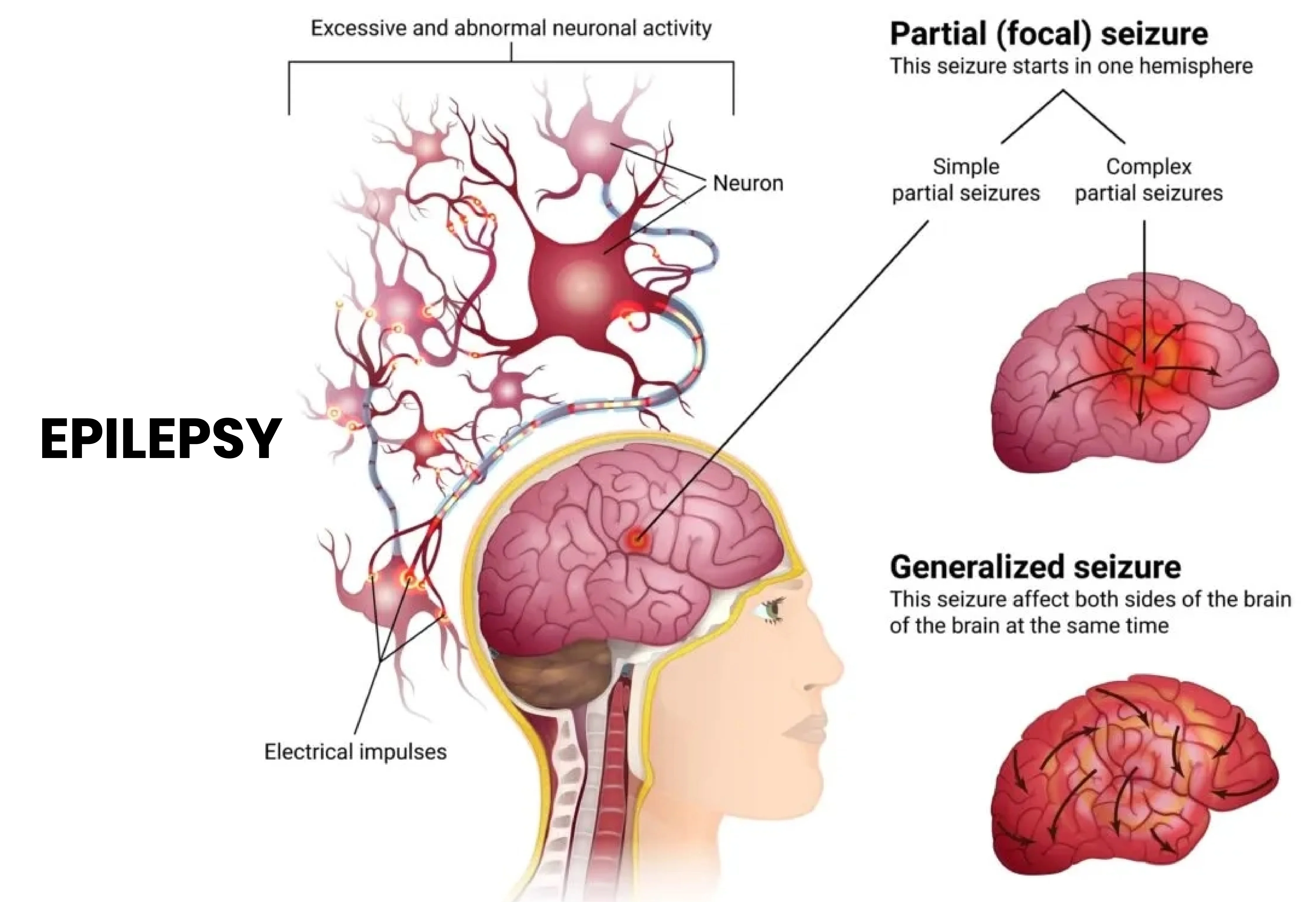
What Happens in Your Brain When You Have Epilepsy?
Here is what is happening at the cellular level:
1. Normal Brain Activity
Your brain cells communicate through electrical impulses and chemical messengers (known as neurotransmitters) in an organized pattern. This helps your body perform desired movements, feelings and functions.
Excitatory signals (such as "go") are balanced with inhibitory signals (such as "stop") to keep every action or function smooth and controlled.
2. During a Recurring Seizure (Epilepsy)
A small group of neurons fires abnormally and intensely and, additionally, recruits other neurons to join in. This forms a chaotic wave of intense electrical bursts, similar to a lightning storm in the brain, leading to symptoms like shaking, staring spells, odd sensations, or loss of awareness until the storm calms down.
This can impact your brain and body depending on the part of the brain involved:
- Temporal lobe (processing what you hear, storing long-term memories, & managing emotions): Can cause sudden fear, joy, strange smells or tastes, déjà vu, lip-smacking, or staring.
- Occipital lobe (processes what your eyes see): Could cause flashing lights or vision changes.
- Motor cortex (responsible for voluntary movement): Leads to twitching, jerking, or rigid muscles (convulsions).
When to See a Doctor About Epilepsy? | The Symptoms
Consult your doctor at the best epilepsy hospital for timely treatment if you experience the following symptoms:
A. Call Emergency Services | Immediately
- A seizure that last longer than 5 minutes
- Multiple seizures with no restoration of consciousness between them.
- Trouble breathing after a seizure.
- Any injury from the seizure.
- Seizures during pregnancy or if you have diabetes.
B. Non-Emergency | In a Timely Manner
- Muscle stiffening or jerking
- Anti-seizure medicines aren't effective anymore
- Temporary confusion
- Staring spells
- Loss of awareness or responsiveness during episodes
- Sensory (Auras) symptoms such as strange smells, tastes, flashing lights, dizziness, and tingling.
What are the Causes of Epilepsy
Experts at an epilepsy specialist hospital say most of the time (in up to 70% of cases), the cause of seizures is unknown (idiopathic).
Here are some known causes:
- Genetic factors
- Damage or abnormalities in brain structure
- Infections like meningitis, encephalitis, HIV, or parasitic infections. These affect your brain
- Immune system to attack body’s own brain cells
Here are some trigger factors:
- Lack of sleep
- Stress
- Hormonal changes (menstruation)
- Alcohol withdrawal
What Happens if Epilepsy Is Left Untreated
A. Physical Risks
- Increase risk of falls, burns, fractures, and dental injuries
- Neuronal death and damage brain cells
- Seizures may occur back-to-back without recovery (known as Status Epilepticus (SE))
- Sudden Unexpected Death in Epilepsy (SUDEP)
B. Cognitive and Mental Health Risks
- Trouble with memory, concentration and other thinking skills
- Higher rates of psychological impact, such as depression, anxiety, and social isolation.
Epilepsy Treatment at the Best Hospital, Delhi
There is no permanent cure, but the multidisciplinary team at IBS Hospital (an epilepsy specialist hospital) focuses on comprehensive care, backed by experienced neuro-specialists, neurosurgeons, neurologists, electrophysiologists, and rehabilitation experts.
Here is the main treatment approach:
1. Anti-Seizure Medications (AEDs)
This is the first-line treatment; doctors prescribe them to lower seizure frequency and severity.
2. Surgery
Your healthcare provider at IBS Hospital will consider surgery if anti-seizure medications don’t control your seizures and if the seizures are severe and debilitating.
3. Brain Stimulation
Brain stimulation devices include Vagus Nerve Stimulation (VNS) and Deep Brain Stimulation (DBS). They send electrical impulses to regulate abnormal brain activity, generally for drug-resistant epilepsy.
4. Dietary Modification
Doctors may recommend a ketogenic diet (high fat, low carb). This helps control seizures, especially in children resistant to medication.
Watch the patient recovery stories here.
Looking for the best epilepsy treatment hospital in India? You can contact the IBS hospital at +91 8929766796.
Our Address: IBS Hospitals, 73 Ring Road, Lajpat Nagar 3 New, Delhi - 110024, India
FAQs
Q1: What is the epilepsy surgery cost?
A: The cost of epilepsy surgery may vary significantly based on location and procedure and other individual factors. The average cost can be ~₹2.5 Lakhs, while the higher end is up to ₹4.5 Lakhs.
Q2: What is the main treatment for epilepsy?
A: Anti-seizure medications (ASMs) are the first-line therapy, meaning the main treatment for epilepsy by limiting abnormal brain activity. Other advanced methods may include options such as brain surgery, Vagus Nerve Stimulation (VNS), and Deep Brain Stimulation (DBS).
Q3: Is there any permanent cure for epilepsy?
A: Around 70 percent of individuals with epilepsy are able to successfully manage epilepsy seizures with the help of prescribed medication and certain types of surgery. However, keep in mind that epilepsy can't be cured and that there's always a risk of having another seizure.
This content is medically reviewed by the IBS Hospital Team, a trusted healthcare provider in diagnosing and managing neurological conditions. All content is medically reviewed to ensure reliability and clinical accuracy.
This content is for informational use only. Contact your doctor for the right epilepsy-related care.
 By -Dr Aaksha Shukla |
January 28, 2026 | 9 Min Read
By -Dr Aaksha Shukla |
January 28, 2026 | 9 Min Read
Brain Tumor Surgery Hospital – Cost & Best Surgeons
Parkinson’s Disease Treatment Hospital in India
Brain Stroke Treatment Hospital – Emergency Care
Stroke Paralysis Treatment Hospital – Advanced Neuro Care
Paralysis Treatment Hospital in India – Cost & Recovery
Brain Infection Symptoms, Causes, and When to Seek Emergency Care
Is Spine Surgery Right for You? Here’s How to Know
Brain Health at Every Age: Preventive Neurology Tips
International Patient Guide: Visiting India for Neuro & Spine Treatments
Robot-Assisted & Navigation-Guided Surgery: Safer Brain & Spine Procedures
Sports Injury Recovery: How Arthroscopy Helps You Heal Faster?
How Deep Brain Stimulation (DBS) Helps in Parkinson’s & Tremor Control
Early Warning Signs of a Brain Tumour & When to See a Neurosurgeon
Signs of a Stroke: When to Seek Emergency Neuro Care
Best Neurosurgery Hospitals in Delhi NCR: A Detailed Guide
Minimally Invasive Spine Surgery: Benefits, Cost & Recovery
Best Tips for Sports Injury Recovery
Guide to Stroke Prevention and Recovery