


Book an Appointment
Call Us01140846835Spine Surgery Hospital in India – Cost & Recovery
Back pain is one of the common reasons people consult their doctor, and in many cases, conservative treatment, such as physical therapy and anti-inflammatory medications, can bring relief.
However, persistent back pain due to spinal deformity, spinal infections, trauma, spine tumors, and some degenerative spine conditions, such as stenosis and herniated disks, may require surgical treatment.
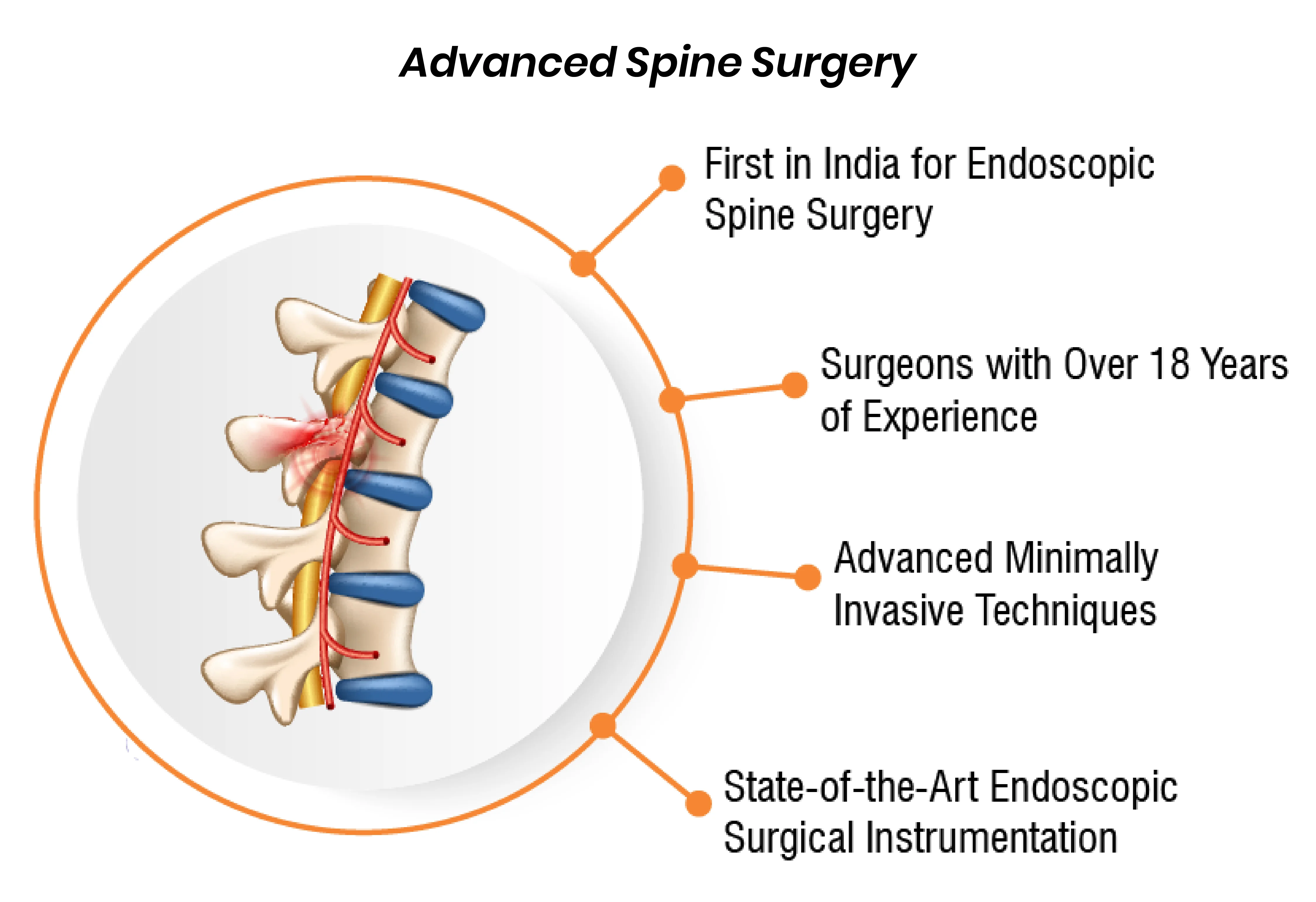
Spine Surgery at IBS Hospital Delhi comes with an advanced minimally invasive approach, like robotic spine surgery, navigation-guided surgery, etc. These help achieve better recovery, reduced pain, improved mobility, and an enhanced quality of life. Watch the recovery video of Rina Kumari from a spine nerve problem here.
Our experts, like Dr. Dewaker Sharma (Senior Neurosurgeon, IBS Hospital, New Delhi), with 20 years of experience, offer the best approach and holistic rehabilitation care that minimizes discomfort and downtime, helping you get back to an active lifestyle.
When the Best Spine Surgeon at IBS Hospital May Recommend Surgery
Spine surgery can be recommended when conservative treatments (physiotherapy, medication, injections) fail, or immediately for severe neurological deficits like progressive weakness, numbness, or loss of bowel/bladder control.
Here are the key indications for spine surgery:
1. Progressive Neurological Deficits
If symptoms like weakness, numbness, or tingling in the arms, legs, or other limbs are rapidly worsening. This may signal spinal cord or nerve compression, increasing the risks of permanent damage if untreated.
2. Cauda Equina Syndrome (CES)
CES is a rare, surgical emergency caused by severe compression of the nerve roots at the base of the spinal cord. This can lead to loss of bowel or bladder control, or sudden weakness, requiring immediate intervention to prevent paralysis.
3. Failure of Conservative Care
If the traditional methods like physical therapy, medications, epidural injections, or lifestyle modifications fail to show effect. And there is constant worsening pain or dysfunction even after more than 6 weeks, surgeons at the best spine hospital can consider surgical options.
4. Spinal Structural Issues or Instability
Structural issues like traumatic fractures, severe spinal stenosis (narrowing of the spinal canal), or spondylolisthesis (vertebra slippage) can destabilize the spine, harming the spinal cord or nerves. This may require surgical options.
5. Severe Herniated Discs
Large disc protrusions lead to intense, often disabling (e.g., sciatica), severe motor weakness, or reflex loss. These conditions can severely restrict daily function and may require surgery if they do not resolve with rest or therapy.
6. Spinal Infections or Tumors
Progressive infections (such as abscesses or osteomyelitis) or tumors (benign or malignant) compress the spine. These can lead to pain, fever, and neurological decline; hence, surgery can be done for removal or stabilization.
What Are the Different Types of Spine Surgery?
The best spine surgeon at IBS Hospital may consider the following types of surgery based on the type, severity, and other individual factors.
A. Common Decompression Surgeries
- Discectomy (or Microdiscectomy): Removes part or all of a herniated or damaged disc.
- Laminectomy/Laminotomy: Removes or trims the lamina (the bony roof of the vertebra) to create more space for the spinal cord or nerves.
- Foraminotomy: Widens the foramina (the small openings where nerves exit the spine).
B. Common Stabilization Surgeries
- Spinal Fusion: Permanently joins two or more vertebrae with the help of bone grafts and often metal implants (such as screws, rods, or cages).
- Artificial Disc Replacement: Replaces a damaged disc in the cervical or lumbar spine with a synthetic disc.
C. Fracture and Deformity Treatments
- Kyphoplasty/Vertebroplasty: Minimally invasive procedures that inject bone cement into fractured vertebrae.
- Osteotomy: Involves cutting and reshaping one or more vertebrae for better alignment. This option can be considered in severe curves like kyphosis or scoliosis.
D. Types Based on Surgical Approaches
- Open Surgery: Traditional technique that involve the use of a larger incision to directly access and treat the spine.
- Minimally Invasive Spine Surgery (MISS): Modern techniques that use small incisions, through specialized tools, and imaging (like endoscopes). This reduces tissue damage and recovery time.
How Long Does It Take to Heal After Spine Surgery?
The recovery may vary greatly by procedure and the patient’s individual factors. Recuperation may take up to 3-6 months or more for major fusion; however, you may start feeling better after 4-8 weeks.
Spine Surgery Cost
The cost may vary based on the type and severity of the condition, procedure, hospital, and city.
Here is the general price breakdown:
- Microdiscectomy/Discectomy: ₹60,000 to ₹2,80,000
- Spinal Fusion: ₹2,50,000 to ₹5,00,000
- Artificial Disc Replacement: ₹2,00,000 to ₹5,50,000
- Laminectomy/Decompression: ₹1,00,000 to ₹2,50,000
- Foraminotomy: ₹1,80,000 to ₹2,50,000
Best Advanced Spine Surgery Hospital | IBS
Established in the year 2011, IBS Hospital is a leading spine surgery hospital focusing on minimally invasive methods. Our patients experience high success with lower complications.
Our comprehensive range of procedures includes:
- Spine Treatment For Tumors
- Minimally Invasive Spinal Decompression
- Endoscopic Discectomy
- Microscopic Discectomy
- Cervical Disc Replacement
- Posterior Cervical Fixation
- ACDF
- Navigation Guided Lumbar Fixation
- Scoliosis and Deformity Correction
- Spinal Pain Management
- PLIF Posterior Lumbar Interbody Fusion
- TLIF
- Vertebroplasty And Kyphoplasty
- Spinal Injections
You can watch the recovery video, Yogesh Kumar.
Experienced spine surgeons at IBS provide holistic spine treatment tailored to each individual’s needs and long‑term spinal health. We have received Google ratings average 4.4/5 from over 1,129 reviews.
Looking for the best hospital for spine surgery?
Contact IBS at +91 8929766796, 73 Ring Road, Lajpat Nagar 3, Delhi - 110024, India
FAQs
Q1: How serious is spine surgery?
A: Spine surgery is considered safe when performed by qualified surgeons, with the benefits often outweighed by risks. It is considered a serious but generally highly effective procedure, especially when done for clear indications such as nerve compression, instability, or deformity.
Q2: What is the age limit for spinal surgery?
A: There is no fixed age limit for spinal surgery; after proper diagnosis and meeting the criteria, both very young and very old patients (70s, 80s, even 90s) can be candidates if medically fit.
This content is medically reviewed by the IBS Hospital Team, a trusted healthcare provider in diagnosing and managing neurological conditions. All content is medically reviewed to ensure reliability and clinical accuracy.
This content is for informational use only. Contact your doctor for the right care.
 By -Dr Aaksha Shukla |
January 31, 2026 | 9 Min Read
By -Dr Aaksha Shukla |
January 31, 2026 | 9 Min Read
Deep Brain Stimulation Surgery Hospital – DBS Cost
Sciatica Pain Treatment Hospital
Cervical Spondylosis Treatment Hospital
Slip Disc Treatment Hospital – Surgery & Pain Relief
Spinal Cord Injury Treatment Hospital
Head Injury Treatment Hospital – Emergency Neurosurgery
Brain Tumor Surgery Hospital – Cost & Best Surgeons
Epilepsy Treatment & Surgery Hospital
Parkinson’s Disease Treatment Hospital in India
Brain Stroke Treatment Hospital – Emergency Care
Stroke Paralysis Treatment Hospital – Advanced Neuro Care
Paralysis Treatment Hospital in India – Cost & Recovery
Brain Infection Symptoms, Causes, and When to Seek Emergency Care
Is Spine Surgery Right for You? Here’s How to Know
Brain Health at Every Age: Preventive Neurology Tips
International Patient Guide: Visiting India for Neuro & Spine Treatments
Robot-Assisted & Navigation-Guided Surgery: Safer Brain & Spine Procedures
Sports Injury Recovery: How Arthroscopy Helps You Heal Faster?
How Deep Brain Stimulation (DBS) Helps in Parkinson’s & Tremor Control
Early Warning Signs of a Brain Tumour & When to See a Neurosurgeon