
Book an Appointment
Call Us09958011121What Is Neuromodulation Therapy? Types, Benefits & How It Works
Your nervous system is like a bustling city, where signals of movement, sensation, and pain move in coordinated pathways (nerves). However, when there are disruptions in these pathways due to injury, stroke, or neurological conditions, movement, sensation, and other functions can be affected.
At IBS Hospital, neuromodulation therapy plays a crucial role. This modulates neural signals to enhance communication between the brain and the body, helping relieve symptoms and improve daily function.
Neuromodulation Meaning
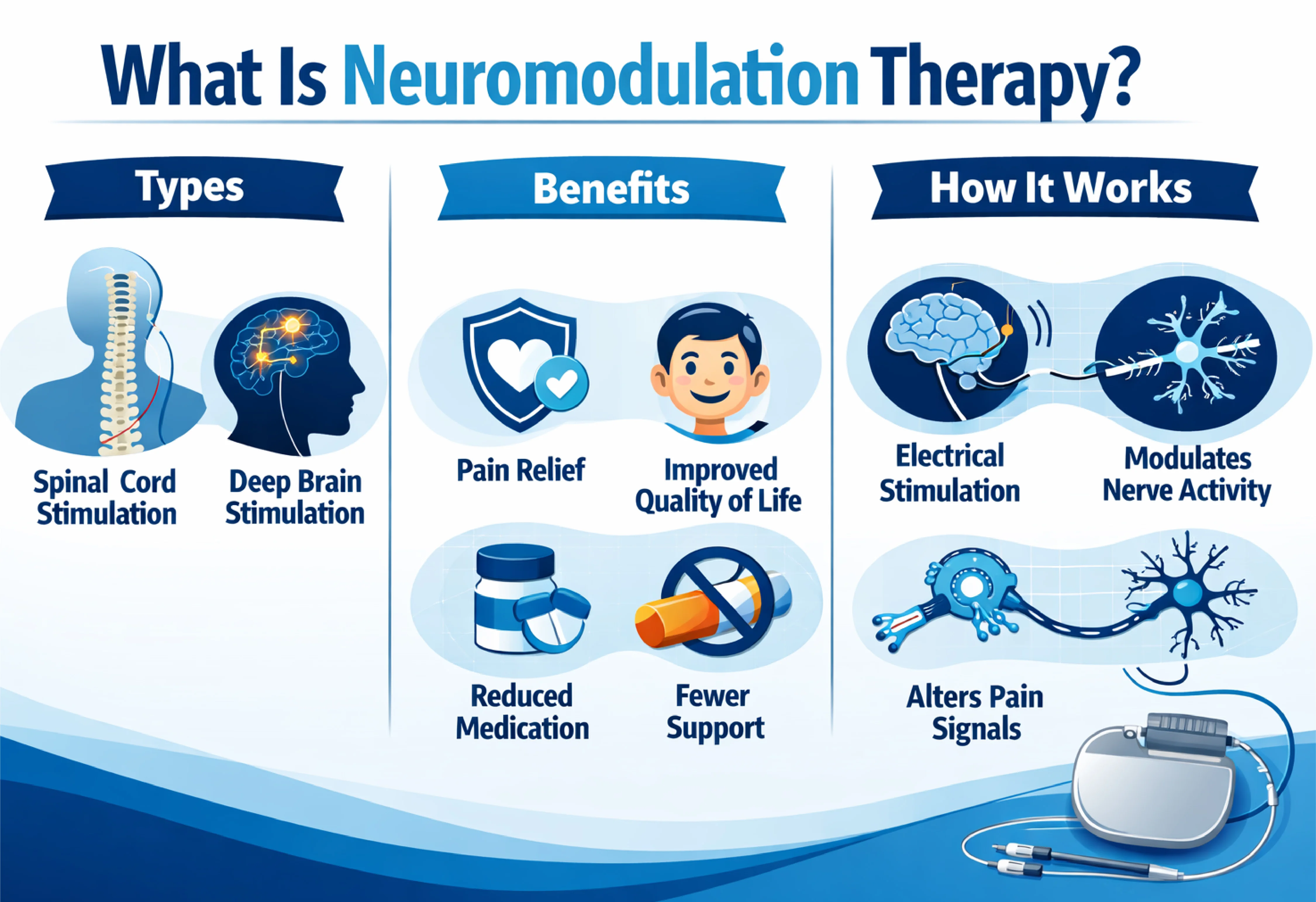
Neuromodulation is a series of techniques that act directly upon nerves. It is the alteration (or modulation) of nerve activity by delivering electrical or pharmaceutical agents directly to a target area.
By altering how nerves transmit signals to and from the brain, this therapy can help reduce pain and improve mobility.
Types of Neuromodulation
Here are the main types:
1. Deep Brain Stimulation (DBS)
It is a medical procedure that involves a mild electrical current delivered to a specific part of your brain.
Deep Brain Stimulation (DBS) is approved by the U.S. Food and Drug Administration (FDA) for treating conditions such as:
- Dystonia.
- Essential tremor.
- Medication-resistant epilepsy.
- Parkinson’s disease (when this condition worsens and medication is not as effective).
- Medication-resistant obsessive-compulsive disorder (OCD).
2. Spinal Cord Stimulation (SCS)
A spinal cord stimulator (SCS) is a medical device that a surgeon implants in your body to help address severe pain.
Your doctor can recommend SCS to manage the following conditions:
- Angina or other types of chest pain
- Back pain
- Phantom limb pain
- Postherpetic neuralgia (pain after having shingles)
- Spinal cord injuries
- Complex regional pain syndrome
- Diabetes-related neuropathy
- Neuropathic pain
- Constant spinal pain syndrome after laminectomy surgery
3. Vagus Nerve Stimulation (VNS)
Vagus nerve stimulation (VNS) uses an implantable device to stimulate the vagus nerve (which carries signals between your brain, heart, and digestive system) in your neck. VNS is sometimes called a “pacemaker for the brain".
The U.S. Food and Drug Administration (FDA) has approved VNS for the following conditions:
- Epilepsy
- Depression
- An add-on to rehabilitation therapy for individuals who have moderate to severe loss of arm and hand function because of ischaemic (blocked blood flow) stroke.
4. Responsive Neurostimulation (RNS)
Responsive neurostimulation (RNS) is a surgically implanted device that healthcare professionals use to treat seizures. The RNS® System delivers tiny amounts of electricity to your brain when it notices abnormal electrical activity in your brain. Over time, this helps reduce the frequency of seizures over time
5. Sacral Nerve Stimulation (SNS)
Sacral nerve stimulation (SNS) uses an implanted device to send mild electric impulses to stimulate nerves that control your bladder and bowels. It helps control pelvic floor muscles and sphincter muscles, and can reduce urinary frequency in patients with an overactive bladder
SNS is used in the treatment for:
- Fecal incontinence
- Overactive bladder (OAB) syndrome
6. Peripheral Nerve Stimulation (PNS)
Peripheral nerve stimulation (PNS) is a less invasive alternative for patients who are struggling with chronic pain.
PNS treats chronic neuropathic pain by placing a tiny electrical lead near a peripheral nerve.
Doctors can recommend it in the following conditions:
- Complex regional pain syndrome (CRPS)
- Peripheral neuropathy
- Post-amputation pain
- Trigeminal neuropathic pain
7. Types of Non-Invasive Brain Stimulation
Transcranial Magnetic Stimulation (TMS/rTMS)
It is a noninvasive procedure that uses magnetic fields to stimulate nerve cells in the brain to alleviate symptoms of major depression. TMS is generally recommended only when other depression treatments haven't been effective.
This treatment involves delivering repeated magnetic pulses, hence called repetitive TMS, or rTMS.
Transcranial Direct Current Stimulation (tDCS)
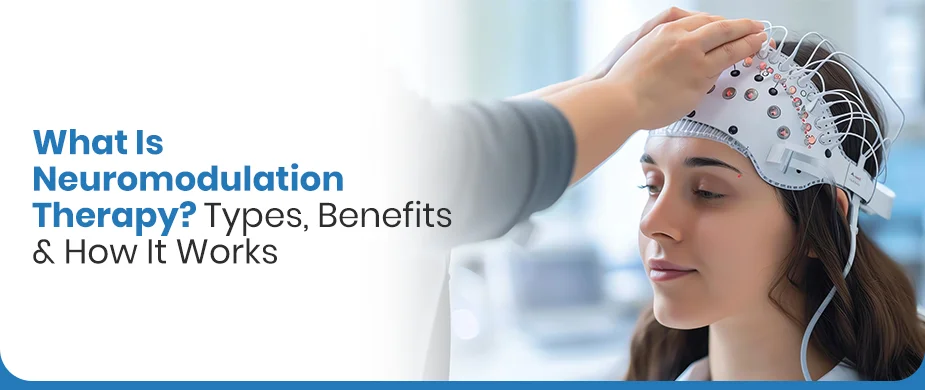
tDCS is a non-invasive brain stimulation technique. It delivers a low electric current through scalp electrodes to modulate neuronal activity.
It can be used in the treatment of Major Depressive Disorder (MDD), schizophrenia, Obsessive-Compulsive Disorder (OCD), Alzheimer's, and stroke rehabilitation.
Who Can Benefit From Neuromodulation Therapy
People with chronic neurological or pain conditions that have not responded well to medication or traditional surgeries can benefit from this therapy.
Here is the list of key conditions that can be addressed with neuromodulation therapy:
- Seizures
- Movement disorders such as Parkinson’s disease, essential tremor, and dystonia
- Chronic pain
- Migraines
- Stroke
- Treatment-resistant depression
- Alzheimer’s disease
Side Effects of Neuromodulation Therapy
This therapy is safe and effective under professional advice. However, like any other medical procedure, it could cause the following side effects:
- Tingling or buzzing sensations
- Pain at the implant site
- Infection
- Device migration
- Potential for mood fluctuations
- Cognitive changes
Benefits of Neuromodulation Therapy
It can offer the following benefits:
- Help manage chronic pain affecting the back, neck, and limbs.
- Enhances neuroplasticity, supporting recovery in conditions such as stroke and spinal cord injury.
- Controls tremors, stiffness, and slowness in Parkinson's and dystonia.
- Can be effective, especially when traditional treatments have failed.
Neuromodulation Therapy Recovery Time
The recovery time may vary based on the type and severity of the condition and the type of procedure used (non‑invasive vs. implant). For an implant, the recovery may usually take 4–6 or more weeks.
How Neuromodulation Works
Neuromodulation works by delivering controlled electrical signals to specific nerves or brain regions. This helps regulate abnormal nerve activity and improve communication within the nervous system.
The success rate of this meuromodulation therapy may vary based on the type and severity of the condition and other individual factors. For example:
- The success rate of SNS for bladder problems is reported to be around 80%.
- Studies have shown that neuromodulation can reduce pain intensity by over 50% in many patients.
Neuromodulation Therapy Cost
The cost may be based on the techniques used, the type and severity of the condition, and the number of sessions. The cost can vary widely depending on the procedure and may range up to several lakhs.
Best Neuromodulation Therapy Hospital | IBS Hospital
IBS Hospital is known to deliver the best care for epilepsy, depression, and stroke through advanced neuromodulation techniques. We are backed by expert neurologists and comprehensive rehabilitation to deliver optimal clinical outcomes.
Our advanced treatment consists of:
- Advanced Critical Care
- Advanced Neuro Rehabilitation
- Deep Brain Stimulation
- Epidural Stimulation
- Sacral Nerve Stimulation
- Navigation-Guided Surgery
You can contact the IBS Hospital at +91 9958011121.
Our Address: IBS Hospitals, 73 Ring Road, Lajpat Nagar 3 New, Delhi - 110024, India
 By -Dr Aaksha Shukla |
April 15, 2026 | 9 Min Read
By -Dr Aaksha Shukla |
April 15, 2026 | 9 Min Read
Cervical Spondylotic Myelopathy: Symptoms, Diagnosis & Surgery
Advanced Neuro Rehabilitation for Cerebral Palsy & Brain Disorders
What Is Cerebral Palsy? Symptoms, Diagnosis & Treatment for Children
Febrile Seizures in Children: What Every Parent Should Know
Brain Aneurysm Treatment in Delhi NCR: Symptoms, Surgery & Recovery
Monsoon Migraine Triggers in 2026: Why Headaches Increase During the Rainy Season
Deep Brain Stimulation Surgery in Delhi for Parkinson’s Tremors
Spine Surgery in Delhi NCR: When is Surgery the Best Option?
Stroke Risk in Summer (2026): How Heat & Dehydration Affect the Brain
Minimally Invasive Brain Surgery: Benefits, Procedure & Recovery
Lower Back Pain: Causes, Symptoms & Non-Surgical Treatments
Slip Disc (Herniated Disc): Symptoms, Causes & Treatment Options
Headache Reasons: Causes of Left Side & Right Side Headache Explained
Home Remedies for Headache: 10 Natural Ways to Get Relief Fast
Parkinson’s Disease Treatment Hospital in India
Brain Stroke Treatment Hospital – Emergency Care
Stroke Paralysis Treatment Hospital – Advanced Neuro Care
Paralysis Treatment Hospital in India – Cost & Recovery
Brain Infection Symptoms, Causes, and When to Seek Emergency Care