
Book an Appointment
Call Us09958011121Minimally Invasive Brain Surgery: Benefits, Procedure & Recovery
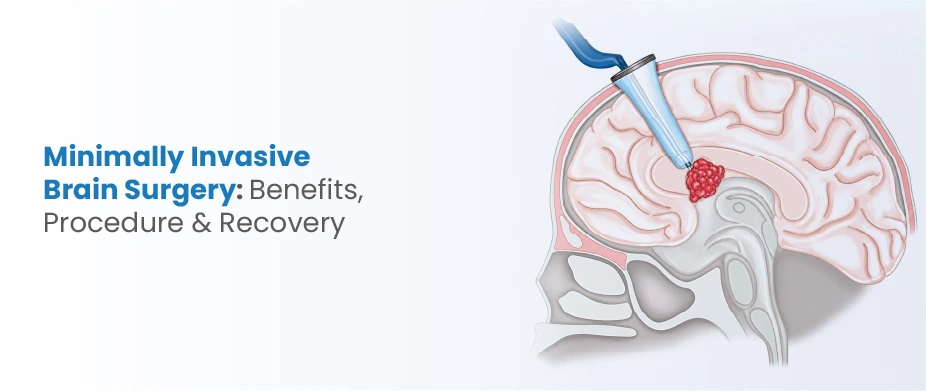
Minimally invasive brain surgery (MIBS) is an advanced neurosurgical technique that is a more effective treatment option for complex brain conditions such as brain tumors, vascular issues, hydrocephalus, and epilepsy.
Unlike traditional open brain surgery, MIBS uses advanced imaging systems, endoscopes, microscopes, and robotic-assisted tools to reach the brain via small keyhole incisions or natural openings like the nose. Thus, allowing faster recovery, smaller scars, less surgical trauma, decreased infection risk, less pain and a quicker return to daily activities.
What is Minimally Invasive Brain Surgery (MIBS)?
MIBS is the latest technique that involves accessing brain lesions, tumors, or abnormalities through tiny openings, often just a few centimeters wide, instead of large skull openings.
Surgeons use advanced equipment like endoscopes, microscopes, and neuronavigation systems to work with more precision and preserve healthy tissue.
What Is Minimally Invasive Surgery Used For?
Doctors use MIBS across multiple specialties, such as:
- General Surgery
- Gastrointestinal Surgery
- Gynecologic Surgery
- Urologic Surgery
- Cardiac/Thoracic Surgery
- Vascular Procedures
Brain Conditions Commonly Treated With MIBS
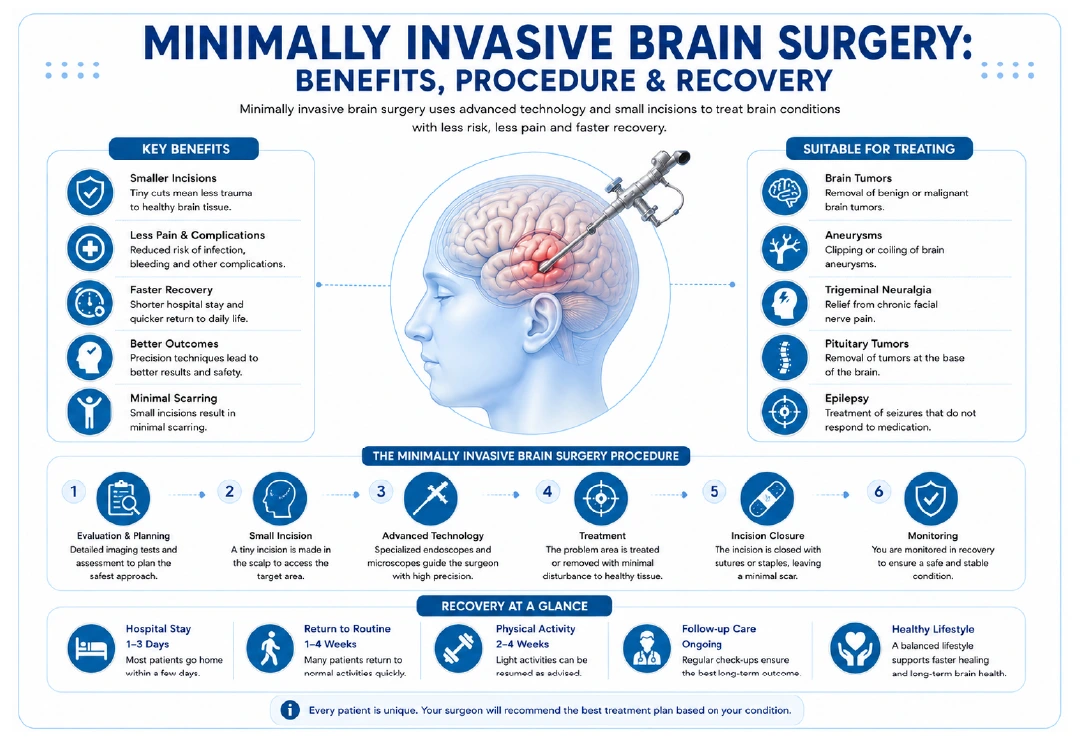
Experts use this technology to address the following brain conditions, such as:
- Brain Tumors: Such as gliomas, meningiomas, pituitary tumors, and skull base tumors.
- Functional and Movement Disorders: Such as Parkinson’s disease, dystonia, and epilepsy.
- Vascular and Other Brain Conditions: Such as aneurysms, hydrocephalus, and colloid cysts.
Benefits of Minimally Invasive Brain Surgery
Doctors at the best brain surgery hospitals, like IBS, are prioritizing minimally invasive methods because of the following potential benefits:
- Reduced trauma and blood loss.
- Reduced risk of surgical complications.
- Reduced risk of infection.
- Reduced scarring.
- Reduced hospital stay and recovery time.
- Reduced pain and need for medication.
- May not need general anesthesia.
- May make surgery possible for some individuals where it wasn’t otherwise.
Types of Minimally Invasive Brain Surgery
There are several minimally invasive techniques that are used based on the patient's condition and other individual factors, such as:
| Type | Description | Common Uses |
| Endoscopic Brain Surgery | Thin tube with camera (endoscope) inserted via small incision or natural opening (e.g., nose) for internal visualization and operation without large skull openings. | Pituitary tumors, hydrocephalus, and ventricular lesions. |
| Keyhole Craniotomy | Tiny skull opening (1-3 cm) created to access deep targets with minimal retraction of brain tissue. | Brain tumors, aneurysms, and skull base abnormalities. |
| Laser Ablation Surgery | An MRI-guided laser delivers heat to destroy abnormal tissue precisely, sparing healthy surroundings. | Epilepsy foci, small tumors, radiation-resistant lesions. |
| Endovascular Neurosurgery | Catheters are threaded through blood vessels (e.g., groin) to deploy coils or stents, no skull incision is needed. | Aneurysms, AVMs, stroke-related clots. |
| Robotic-Assisted Surgery | Robotic arms provide tremor-free precision, enhanced dexterity, and 3D visualization for complex navigation. | Deep-seated tumors, biopsies, epilepsy surgery. |
Step-by-Step Procedure
Here is the general procedure for minimally invasive brain surgery
- Pre-Surgery Planning: MRI and CT scans create a detailed brain map to find the safest surgical path.
- Anesthesia: The patient is given general anesthesia, and the head is secured to prevent movement.
- Small Incision: A tiny cut is made, usually hidden within the hairline.
- Minimal Access Surgery: Surgeons use a small skull opening or enter through the nose for certain tumors.
- Image-Guided Navigation: Advanced navigation tools guide instruments safely to the target area.
- Treatment: The tumor or affected tissue is removed using specialized instruments or lasers.
- Closure: The incision is closed, and the bone is secured if needed.
Tools or Equipment Used in Minimally Invasive Surgery
Some of the equipment used in MIBS are the following:
- Endoscopes
- Imaging equipment
- Trocars
- Balloons
- Da Vinci Surgical System (The da Vinci Surgical System is the robotic system that surgeons use in robotic surgery)
Minimally Invasive Brain Surgery Recovery Time
Recovery time varies depending on the condition treated and the patient’s overall health. However, recovery is generally faster than with conventional brain surgery.
Immediate Recovery
Patients are monitored in the recovery room or intensive care unit after surgery. Doctors observe:
- Brain function
- Blood pressure
- Breathing
- Neurological responses
Some patients may experience temporary headaches, fatigue, or mild swelling.
Hospital Stay
Hospital stays are usually shorter and may range from one to five days depending on the procedure.
Returning Home
Patients are advised to:
- Get adequate rest
- Avoid heavy lifting
- Follow medication instructions
- Attend follow-up appointments
- Gradually resume daily activities
Full Recovery Timeline
Many patients recover within a few weeks, though complete healing may take longer for more complex procedures.
Minimally Invasive vs. Traditional Open Surgery
Here is the key difference:
| Feature | Minimally Invasive Surgery (MIS) | Traditional Open Surgery |
| Incisions & Scarring | Small incisions, usually less than 1 inch | Large incisions, sometimes 9–10 inches |
| Recovery Time | Faster recovery with shorter hospital stay | Longer recovery and hospital stay |
| Pain & Blood Loss | Less pain and reduced blood loss | More pain and higher blood loss |
| Hospital Stay | Often same day or 1–2 days | May require several days or weeks |
| Precision & Technology | Uses advanced imaging and robotic tools | Relies on direct manual access |
| Tissue Damage | Minimal damage to muscles and tissues | Greater tissue and muscle disruption |
Advances in Minimally Invasive Neurosurgery
Technological innovation continues to improve patient outcomes in neurosurgery.
Artificial Intelligence and Navigation Systems
AI-assisted imaging helps surgeons identify critical structures more accurately.
Robotic Precision
Robotic technology improves hand stability during highly delicate procedures.
3D Imaging
Three-dimensional mapping allows better planning before surgery.
Awake Brain Surgery Techniques
In some cases, patients remain awake during surgery so doctors can monitor speech and motor functions in real time.
Who Is a Good Candidate?
Not every patient is suitable for minimally invasive brain surgery. Eligibility depends on:
- Size and location of the condition
- Overall health
- Age
- Previous surgeries
- Neurological status
A neurosurgeon at IBS Hospital evaluates each case carefully to determine the safest and most effective approach.
Minimally Invasive Brain Surgery Cost
Costs depend on the tumor type, location, and surgeon expertise, often including pre-surgical scans and an ICU stay. The typical cost is between ₹3,00,000 and ₹8,00,000.
Risks & Possible Complications
Although minimally invasive brain surgery is generally safer than traditional methods, every surgery carries some risk.
Potential complications include the following:
- Infection
- Bleeding
- Swelling
- Seizures
- Nerve damage
- Cerebrospinal fluid leakage
- Temporary neurological symptoms
Choosing an experienced neurosurgeon and a specialized medical center like IBS Hospital significantly reduces these risks.
Tips for Faster Recovery
Patients can support their recovery by following medical guidance carefully.
Helpful Recovery Tips:
- Eat a balanced diet
- Stay hydrated
- Avoid smoking and alcohol
- Get enough sleep
- Attend rehabilitation if recommended
- Report unusual symptoms immediately
Maintaining a positive mindset and following postoperative instructions can greatly improve healing.
Conclusion
Minimally Invasive Brain Surgery offers safer treatment, smaller incisions, faster recovery, and better outcomes for many neurological conditions, including brain tumors, aneurysms, epilepsy, and pituitary disorders. With advanced technology, these procedures are becoming more precise and effective. Patients should consult an experienced neurosurgeon to determine the best treatment option for their condition.
Are you looking for the best neurosurgeon near me in Delhi?
You can contact the IBS Hospital at +91 9958011121.
Our Address: IBS Hospitals, 73 Ring Road, Lajpat Nagar III, New Delhi – 110024, India
Our Experts:
FAQs
Q1: Is minimally invasive brain surgery safe?
A: Yes, it is considered safe when performed by experienced neurosurgeons using advanced technology. It often has fewer complications compared to traditional open surgery.
Q2: How long does the surgery take?
A: The duration varies depending on the complexity of the condition. Procedures may last anywhere from one to several hours.
Q3: Will there be visible scars?
A: Scarring is usually minimal because the incisions are much smaller than those used in traditional surgery.
Q4: Is recovery painful?
A: Most patients experience less pain compared to open brain surgery, though mild discomfort and fatigue are common initially.
Q5: Can all brain tumors be treated minimally invasively?
A: No. The treatment approach depends on the size, type, and location of the tumor.
Q6: What is the minimally invasive brain surgery success rate?
A: It has a high success rate, with outcomes depending on the patient’s condition, tumor location, overall health, and the expertise of the neurosurgical team.
 By -Dr Aaksha Shukla |
May 18, 2026 | 9 Min Read
By -Dr Aaksha Shukla |
May 18, 2026 | 9 Min Read
Cervical Spondylotic Myelopathy: Symptoms, Diagnosis & Surgery
Advanced Neuro Rehabilitation for Cerebral Palsy & Brain Disorders
What Is Cerebral Palsy? Symptoms, Diagnosis & Treatment for Children
Febrile Seizures in Children: What Every Parent Should Know
Brain Aneurysm Treatment in Delhi NCR: Symptoms, Surgery & Recovery
Monsoon Migraine Triggers in 2026: Why Headaches Increase During the Rainy Season
Deep Brain Stimulation Surgery in Delhi for Parkinson’s Tremors
Spine Surgery in Delhi NCR: When is Surgery the Best Option?
Stroke Risk in Summer (2026): How Heat & Dehydration Affect the Brain
Lower Back Pain: Causes, Symptoms & Non-Surgical Treatments
Slip Disc (Herniated Disc): Symptoms, Causes & Treatment Options
What Is Neuromodulation Therapy? Types, Benefits & How It Works
Headache Reasons: Causes of Left Side & Right Side Headache Explained
Home Remedies for Headache: 10 Natural Ways to Get Relief Fast
Parkinson’s Disease Treatment Hospital in India
Brain Stroke Treatment Hospital – Emergency Care
Stroke Paralysis Treatment Hospital – Advanced Neuro Care
Paralysis Treatment Hospital in India – Cost & Recovery
Brain Infection Symptoms, Causes, and When to Seek Emergency Care