
Book an Appointment
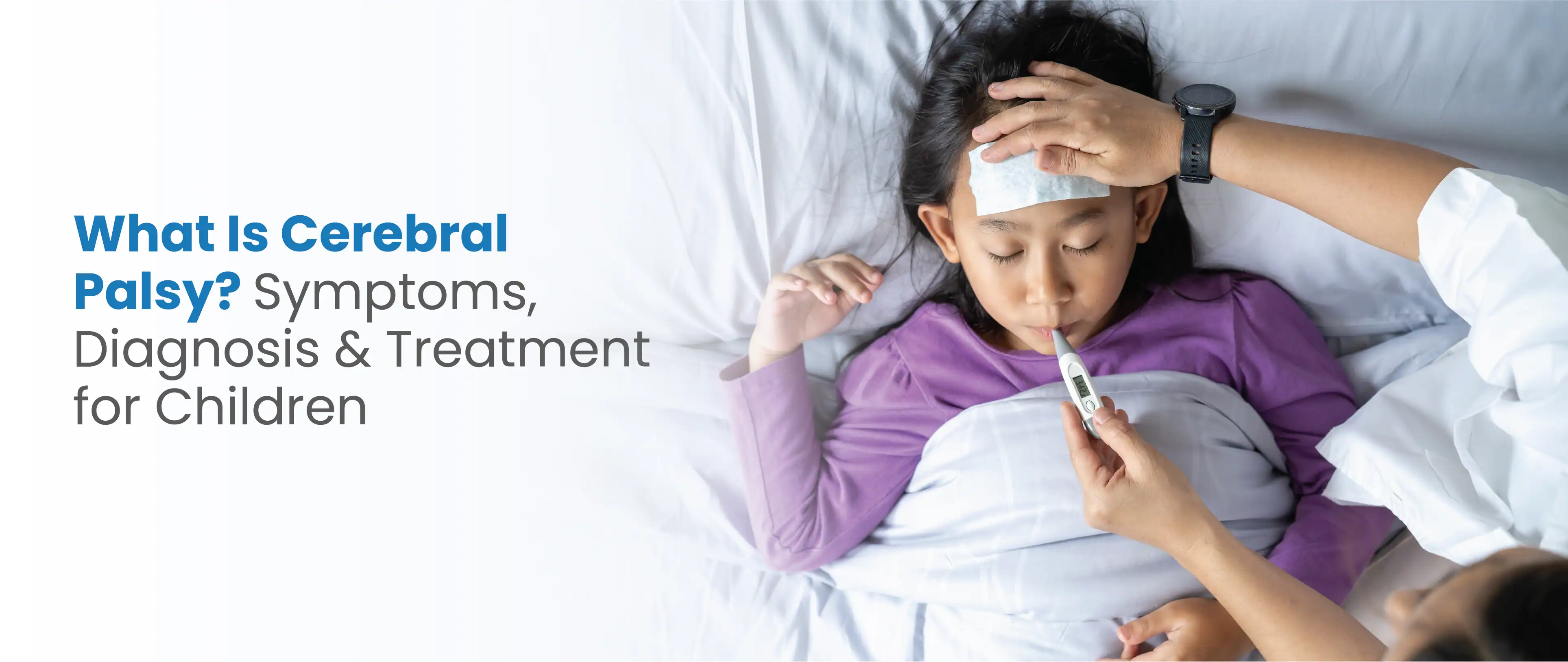
Call Us09958011121What Is Cerebral Palsy? Symptoms, Diagnosis & Treatment for Children
Cerebral palsy (CP) is a group of permanent neurological conditions affecting movement, posture, and coordination, caused by abnormal brain development or damage before, during, or shortly after birth. Although there is no definitive treatment for this disease, cerebral palsy treatment, combined with timely and appropriate intervention, can be life-changing. Understanding the early signs of cerebral palsy, symptoms, and treatment are vital to help a child with cerebral palsy live a normal life.
Read Also: How To Recover From Virtual Autism?
What Is Cerebral Palsy?
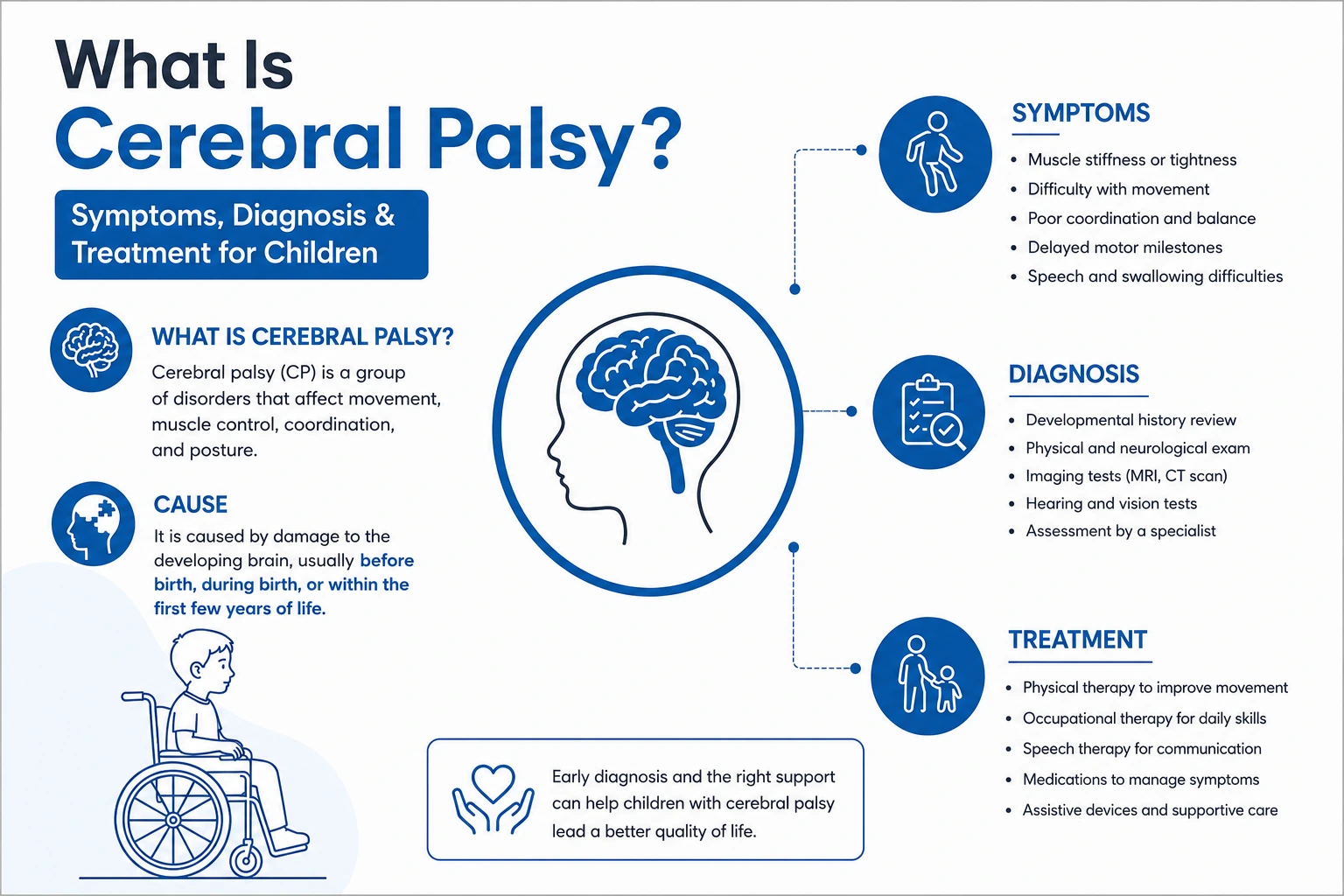
Cerebral palsy refers to a neurological disease characterized by impairments related to motor skills, coordination, posture, and muscle tone. According to the CDC, cerebral palsy is the most common motor disability in childhood that primarily affects movement, muscle tone, posture, and coordination.
This disease can present with a wide range of symptoms from mild to severe cases. For example, some children may exhibit only slight motor skill problems, while others may lose control of their bodies completely.
What Causes Cerebral Palsy?
Several factors can cause cerebral palsy, such as:
- Brain injury before birth
- Prematurity
- Low birth weight
- Lack of oxygen before or during birth
- Newborn infections like meningitis
- Stroke before or around birth (perinatal stroke)
- Genetic mutations affecting brain development
According to the National Institute of Neurological Disorders and Stroke (NINDS), cerebral palsy mostly develops before birth; complications during labour and delivery account for only a small proportion of cases.
Read Also: Best Paralysis Treatment in Delhi : Causes, Types and Symptoms
What Are the Early Signs of Cerebral Palsy?
The early signs of cerebral palsy enable early diagnosis, which helps the child receive treatment to improve their quality of life. The most common warning signs of cerebral palsy are:
- Delays in developmental milestones
- Poor head control
- Poor coordination
- Tight or weak muscles
- Fisting of the hands
- Feeding or swallowing problems
- Delays in rolling, sitting, or crawling
If parents notice these early signs of cerebral palsy, they should consult a specialist to discuss cerebral palsy treatment options.
What Are the Symptoms of Cerebral Palsy?
The symptoms of cerebral palsy vary depending on the severity of the disease and the type of this disorder. The most common symptoms of cerebral palsy are:
- Stiff muscles
- Involuntary movements (dyskinesia)
- Poor balance and coordination
- Difficulty walking or abnormal gait
- Developmental delays
- Abnormal postures
- Speech and language disorders
- Swallowing problems
Moreover, people with cerebral palsy may also have various associated problems, including seizures, visual and hearing impairments, and learning disorders.
How Is Cerebral Palsy Diagnosed?
Various diagnostic tests can help determine whether a person has cerebral palsy, including developmental and physical examinations, neurological examination, brain MRI scans, and genetic testing may be recommended in selected cases when another neurological or genetic condition is suspected. A definitive cerebral palsy diagnosis is vital for a child to receive appropriate cerebral palsy treatment. According to the American Academy of Paediatrics (AAP), developmental screening and surveillance are essential to recognize developmental problems early and provide timely interventions.
What Are the Treatment Options for Cerebral Palsy?
Even though there is no absolute cure for cerebral palsy, every child with this disease can benefit from a customized treatment plan. A combination of the following cerebral palsy treatment options can improve the patient’s functionality and quality of life:
Physical Therapy
Physical therapy helps patients achieve motor milestones, gain control of their bodies, and provide their child with the emotional and psychological support they need. This treatment is effective in preventing joint contractures and musculoskeletal deformities and contractions and is usually a central element in a cerebral palsy treatment plan.
Occupational Therapy
Occupational therapy helps patients develop skills needed to perform daily tasks, such as eating and dressing.
Speech and Language Therapy
Speech-language therapy assists patients in improving their speech function and communication abilities.
Medications
Physicians may prescribe drugs to treat seizures, decrease muscle spasms, and control pain. The choice of drugs mainly depends on each patient’s symptoms.
How Can Parents Support a Child with Cerebral Palsy?
Caregivers and parents of patients with cerebral palsy can play an important role in their child's rehabilitation in various ways, such as:
- Participating in therapies and treatment programs
- Encouraging the child to be physically active
- Following a home program recommended by healthcare providers
- Supporting medical appointments and recommended treatments
- Consulting with health professionals and specialists
Moreover, family members and caregivers should provide the child with emotional support and encouragement while promoting independence whenever possible. According to the CDC, parents and caregivers must work with healthcare professionals, therapists, and educators to help a child with cerebral palsy.
Take the First Step Toward Early Diagnosis and Better Care
If you suspect that your child has cerebral palsy or exhibits any of the early signs of cerebral palsy, you should contact a developmental or paediatric neurology specialist to schedule an appointment. They will review your concerns and discuss cerebral palsy treatment options.
FAQs
Q1: What is the first sign of cerebral palsy?
A: Some of the first signs of cerebral palsy include developmental delays, poor coordination, unusual muscle tone, and poor head control. If you suspect that your child has cerebral palsy, you should contact a specialist to set up an appointment.
Q2: Can cerebral palsy be cured?
A: There is no cure for cerebral palsy, but patients can undergo various interventions to manage their symptoms.
Q3: At what age is cerebral palsy diagnosed?
A: Some patients are diagnosed with cerebral palsy at a young age, many children are diagnosed between 1 and 2 years of age, although milder cases may be recognised later, depending on the presenting symptoms.
Q4: What therapies are used for cerebral palsy treatment?
A: The most common therapies for cerebral palsy treatment include physical therapy, occupational therapy, and speech-language therapy. Moreover, there are several other surgical procedures and medications that can be used to manage this disease.
Q5: Can children with cerebral palsy live a normal life?
A: Many children with cerebral palsy can lead active, fulfilling, and independent lives with early intervention and appropriate support.
 By -Dr Aaksha Shukla |
July 31, 2026 | 9 Min Read
By -Dr Aaksha Shukla |
July 31, 2026 | 9 Min Read
Cervical Spondylotic Myelopathy: Symptoms, Diagnosis & Surgery
Advanced Neuro Rehabilitation for Cerebral Palsy & Brain Disorders
Febrile Seizures in Children: What Every Parent Should Know
Brain Aneurysm Treatment in Delhi NCR: Symptoms, Surgery & Recovery
Monsoon Migraine Triggers in 2026: Why Headaches Increase During the Rainy Season
Deep Brain Stimulation Surgery in Delhi for Parkinson’s Tremors
Spine Surgery in Delhi NCR: When is Surgery the Best Option?
Stroke Risk in Summer (2026): How Heat & Dehydration Affect the Brain
Minimally Invasive Brain Surgery: Benefits, Procedure & Recovery
Lower Back Pain: Causes, Symptoms & Non-Surgical Treatments
Slip Disc (Herniated Disc): Symptoms, Causes & Treatment Options
What Is Neuromodulation Therapy? Types, Benefits & How It Works
Headache Reasons: Causes of Left Side & Right Side Headache Explained
Home Remedies for Headache: 10 Natural Ways to Get Relief Fast
Parkinson’s Disease Treatment Hospital in India
Brain Stroke Treatment Hospital – Emergency Care
Stroke Paralysis Treatment Hospital – Advanced Neuro Care
Paralysis Treatment Hospital in India – Cost & Recovery
Brain Infection Symptoms, Causes, and When to Seek Emergency Care