


Book an Appointment
Call Us09958011121Brain Aneurysm Treatment in Delhi NCR: Symptoms, Surgery & Recovery
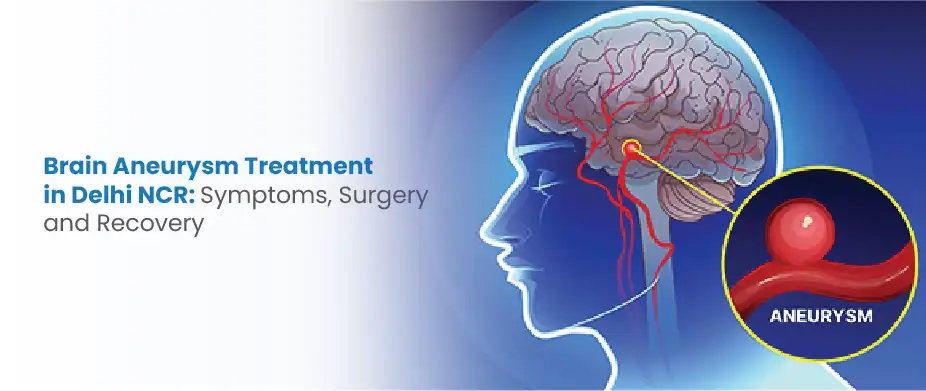
A sudden, severe headache often described as the 'worst headache of your life'—known medically as a thunderclap headache—should never be ignored. In some cases, it can be a warning sign of a brain aneurysm (cerebral aneurysm) is a weak, bulging area in the wall of an artery in the brain. It balloons outward and fills with blood, much like a thin spot on an inflating tire.
It is important to note that not every "worst headache" (thunderclap headache) is caused by a brain aneurysm, but must be evaluated as one until proven otherwise. A ruptured brain aneurysm can be life-threatening and requires emergency medical treatment.
The good news? Advances in brain aneurysm treatment, minimally invasive procedures, high-resolution imaging, and specialized Neuro ICU care have dramatically improved survival and recovery rates over the last decade.
For anyone searching for brain aneurysm treatment in Delhi NCR, this guide answers the most important questions patients and families ask:
- What is a brain aneurysm?
- What are the early warning signs of a brain aneurysm?
- When is surgery required?
- What treatment options are available?
- How long does recovery take?
- What role does a Neuro ICU (Neurological Intensive Care Unit) play after surgery?
Let's begin with the basics.
 Read Also: Traumatic Brain Injury: Symptoms, Causes, and Treatments
What is a Brain Aneurysm?
Think of a garden hose with a weak spot in its wall. Over time, water pressure causes that weak area to bulge outward.
A brain aneurysm develops in a similar way. It occurs when a weakened section of a blood vessel in the brain balloons outward due to continuous blood flow pressure.
Many aneurysms remain small and never cause symptoms. However, if the aneurysm leaks or ruptures, it can lead to a brain hemorrhage or hemorrhagic stroke, both of which are medical emergencies.
Quick Overview
| Factor | Brain Aneurysm |
| What it is | Bulging or ballooning of a brain artery |
| Common location | Base of the brain (Circle of Willis) |
| Symptoms | Often none until enlargement or rupture |
| Major risk | Rupture causing hemorrhagic stroke |
| Emergency sign | Sudden severe thunderclap headache |
| Treatment | Monitoring, coiling, clipping, flow diversion |
Read Also: Exploring the Best Treatments for Brain Stroke
What Are the Symptoms of a Brain Aneurysm?
Brain aneurysms are particularly dangerous because many remain asymptomatic until they enlarge or rupture.
Symptoms of an Unruptured Brain Aneurysm
A growing aneurysm may press on nearby nerves and cause:
- Pain behind or above one eye
- Double vision
- Blurred vision
- Dilated pupil
- Facial numbness
- Headaches
- Seizures in some cases
Symptoms of a Ruptured Brain Aneurysm
When an aneurysm ruptures, symptoms appear suddenly.
Watch for:
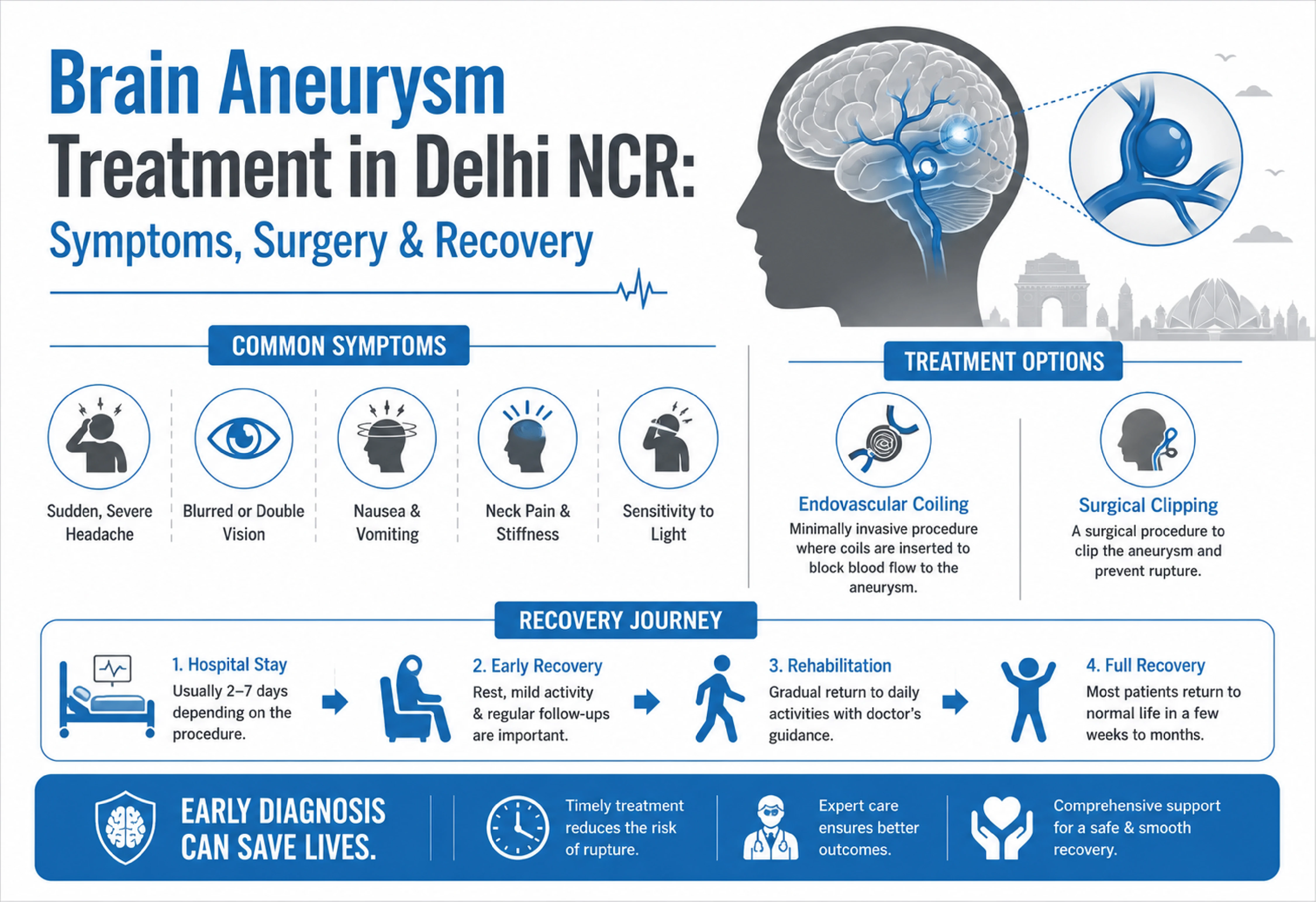
- Sudden severe headache ("worst headache of my life")
- Nausea and vomiting
- Stiff neck
- Sensitivity to light
- Confusion
- Weakness on one side of the body
- Loss of consciousness
- Seizures
Note: A ruptured aneurysm requires immediate emergency treatment. Every minute matters.
Read Also: All you need to know about Deep Brain Stimulation
Who is More Prone to Brain Aneurysms?
Certain risk factors increase the chances of developing or rupturing an aneurysm.
| Risk Factor | Impact |
| Smoking | Strongly linked to aneurysm formation and rupture |
| High blood pressure | Weakens artery walls |
| Family history | Risk increases significantly |
| Age 30-60 years | Most commonly diagnosed between ages 30–60 years |
| Female sex | Slightly higher risk |
| Heavy alcohol use | Raises blood pressure |
| Cocaine use | Major rupture risk |
| Polycystic kidney disease | Associated genetic condition |
| Connective tissue disorders | Can weaken blood vessels |
If two or more close relatives have had a brain aneurysm, screening may be recommended even before symptoms appear.
Read Also: The Importance of Timely Stroke Management and Rehabilitation
How Is a Brain Aneurysm Diagnosed?
Modern imaging has transformed early detection.
Doctors may recommend:
CT Scan
Usually the first test during emergencies to identify bleeding.
CT Angiography (CTA)
Provides detailed images of brain blood vessels.
MRI and MRA
Useful for identifying unruptured aneurysms and monitoring growth.
Cerebral Angiography
Considered the gold standard for evaluating aneurysm size, shape, and location before treatment.
Early diagnosis often allows treatment before a potentially devastating hemorrhagic stroke occurs.
Brain Aneurysm Treatment Options in Delhi NCR
Treatment depends on several factors such as:
- Size of the aneurysm
- Location
- Whether it has ruptured
- Patient age
- Overall health
- Risk of future rupture
Note: Not all unruptured aneurysms require treatment. Management decisions are based on aneurysm size, location, growth pattern, patient age, and overall rupture risk.
The main goal of treatment is to stop or reduce the flow of blood into the aneurysm. A leaking or ruptured brain aneurysm needs emergency surgery. You may or may not need treatment for an unruptured aneurysm depending on your circumstances.
1. Observation and Monitoring
For small, low-risk aneurysms, doctors may recommend:
- Regular MRI or CTA scans
- Blood pressure control
- Smoking cessation
- Lifestyle modifications
This approach is often used when treatment risks outweigh rupture risks.
2. Endovascular Coiling
Endovascular coiling is one of the most common minimally invasive brain aneurysm treatment options today.
How It Works
A catheter is inserted through an artery in the wrist or groin and guided to the aneurysm.
Tiny platinum coils are placed inside the aneurysm, causing blood clotting and preventing further blood flow into the weakened area.
Potential Benefits
- No large skull opening
- Shorter hospital stay
- Faster recovery
- Reduced surgical trauma
Recovery is often faster than with open surgical procedures, although timelines vary depending on individual factors.
3. Surgical Clipping (Brain Hemorrhage Surgery)
Surgical clipping remains a highly effective treatment, especially for certain aneurysm locations.
How It Works
A neurosurgeon performs a craniotomy and places a small titanium clip at the neck of the aneurysm.
The clip is placed across the neck of the aneurysm to exclude it from circulation while preserving normal blood flow through the parent artery.
Best For
- Complex aneurysms
- Certain middle cerebral artery aneurysms
- Cases where long-term durability is preferred
Although more invasive, clipping often provides a permanent solution with very low recurrence rates.
4. Flow Diversion Technology
One of the most significant advances in brain aneurysm treatment involves flow-diverting stents.
These specialized devices redirect blood flow away from the aneurysm, allowing the vessel wall to heal naturally over time.
Flow diversion has expanded treatment possibilities for aneurysms that were once considered difficult to manage.
Comparison of Brain Aneurysm Treatment Options
| Treatment | Invasive Level | Hospital Stay | Recovery Time |
| Monitoring | None | Not required | Ongoing follow-up |
| Endovascular Coiling | Minimally invasive | 1-3 days | Few weeks |
| Flow Diversion | Minimally invasive | 1-3 days | Few weeks |
| Surgical Clipping | Open surgery | 4-7 days or more | Several weeks to months |
Note: The right treatment depends on individual anatomy and aneurysm characteristics rather than a one-size-fits-all approach.
What Happens If a Brain Aneurysm Ruptures?
A ruptured aneurysm can cause:
- Subarachnoid hemorrhage
- Hemorrhagic stroke
- Brain swelling
- Hydrocephalus
- Vasospasm
- Seizures
Emergency intervention is usually required.
Individuals are often admitted directly to a specialized Neuro ICU where continuous monitoring helps prevent secondary brain injury.
Why Is Neuro ICU Care So Important?
Families often focus on the surgery itself, but recovery frequently depends on what happens afterward.
A specialized Neuro ICU provides:
- Continuous neurological monitoring
- Blood pressure management
- Ventilator support if needed
- Vasospasm detection
- Seizure prevention
- Hydrocephalus management
The first 14 days after aneurysm rupture are often the most critical.
Experienced Neuro ICU teams like at IBS Hospital, Delhi can significantly improve outcomes by detecting complications early.
Brain Aneurysm Recovery: What to Expect
Recovery varies depending on whether the aneurysm ruptured before treatment.
Recovery After Treatment of an Unruptured Aneurysm
Most patients recover well.
Possible timeline:
| Recovery Stage | Typical Duration |
| Hospital stay | Typically, 1–5 days after uncomplicated minimally invasive treatment and longer following open surgery or rupture. |
| Return to daily activities | 2-6 weeks |
| Full recovery | Several weeks |
Recovery After Rupture
Recovery may take longer and can require rehabilitation.
Some patients may need:
- Physiotherapy
- Occupational therapy
- Speech therapy
- Cognitive rehabilitation
Note: The sooner treatment is provided, the better the chances of preserving brain function.
Can Brain Aneurysms Be Prevented or Their Risk Reduced?
Not all aneurysms can be prevented, but risk can be reduced.
7 Prevention Tips
- Control blood pressure
- Stop smoking
- Limit alcohol intake
- Avoid recreational drugs
- Exercise regularly
- Maintain a healthy weight
- Get screened if there is a strong family history
Think of prevention like maintaining a bridge. Regular inspections and repairs prevent a small structural weakness from becoming a catastrophic collapse.
When Should You See a Neurologist in Delhi?
Schedule an evaluation if you:
- Have persistent unexplained headaches
- Have a family history of aneurysms
- Were diagnosed with an unruptured aneurysm
- Experience visual changes or facial numbness
- Have uncontrolled hypertension
Seek emergency medical care immediately if you develop:
- Sudden thunderclap headache
- Loss of consciousness
- Seizures
- Sudden weakness or paralysis
- Symptoms of hemorrhagic stroke
Conclusion
Brain aneurysms are often silent, but when they rupture, they become one of the most dangerous neurological emergencies. Fortunately, modern brain aneurysm treatment options, including endovascular coiling, flow diversion, surgical clipping, advanced imaging, and specialized Neuro ICU care, have significantly improved survival and recovery outcomes.
The key is early detection. If you have risk factors such as smoking, high blood pressure, or a family history of aneurysms, don't wait for symptoms to appear. Timely evaluation can help identify an aneurysm before it causes a brain hemorrhage or hemorrhagic stroke.
When it comes to brain aneurysms, the best treatment is often the one provided before a rupture ever occurs.
Looking for brain aneurysm treatment in Delhi NCR? IBS Hospital offers advanced diagnostics, minimally invasive and surgical treatment options, specialized Neuro ICU care, and a multidisciplinary team of experienced neuroscience experts. From early diagnosis to recovery, we provide comprehensive, patient-centered care using cutting-edge technology to help achieve the best possible neurological outcomes.
You can contact the IBS Hospital at +91 9958011121.
Our Address: IBS Hospital, 73 Ring Road, Lajpat Nagar III, New Delhi – 110024, India
Our Experts:
- Dr. Kishan Raj, over 18 years of experience
- Dr. Sanjay Kumar Choudhary, over 25 years of experience
- Dr. Sachin Samuel, over 15 years of experience
 By -Dr Aaksha Shukla |
June 16, 2026 | 9 Min Read
By -Dr Aaksha Shukla |
June 16, 2026 | 9 Min Read
Cervical Spondylotic Myelopathy: Symptoms, Diagnosis & Surgery
Advanced Neuro Rehabilitation for Cerebral Palsy & Brain Disorders
What Is Cerebral Palsy? Symptoms, Diagnosis & Treatment for Children
Febrile Seizures in Children: What Every Parent Should Know
Monsoon Migraine Triggers in 2026: Why Headaches Increase During the Rainy Season
Deep Brain Stimulation Surgery in Delhi for Parkinson’s Tremors
Spine Surgery in Delhi NCR: When is Surgery the Best Option?
Stroke Risk in Summer (2026): How Heat & Dehydration Affect the Brain
Minimally Invasive Brain Surgery: Benefits, Procedure & Recovery
Lower Back Pain: Causes, Symptoms & Non-Surgical Treatments
Slip Disc (Herniated Disc): Symptoms, Causes & Treatment Options
What Is Neuromodulation Therapy? Types, Benefits & How It Works
Headache Reasons: Causes of Left Side & Right Side Headache Explained
Home Remedies for Headache: 10 Natural Ways to Get Relief Fast
Parkinson’s Disease Treatment Hospital in India
Brain Stroke Treatment Hospital – Emergency Care
Stroke Paralysis Treatment Hospital – Advanced Neuro Care
Paralysis Treatment Hospital in India – Cost & Recovery
Brain Infection Symptoms, Causes, and When to Seek Emergency Care