


Book an Appointment
Call Us09958011121Cervical Spondylotic Myelopathy: Symptoms, Diagnosis & Surgery
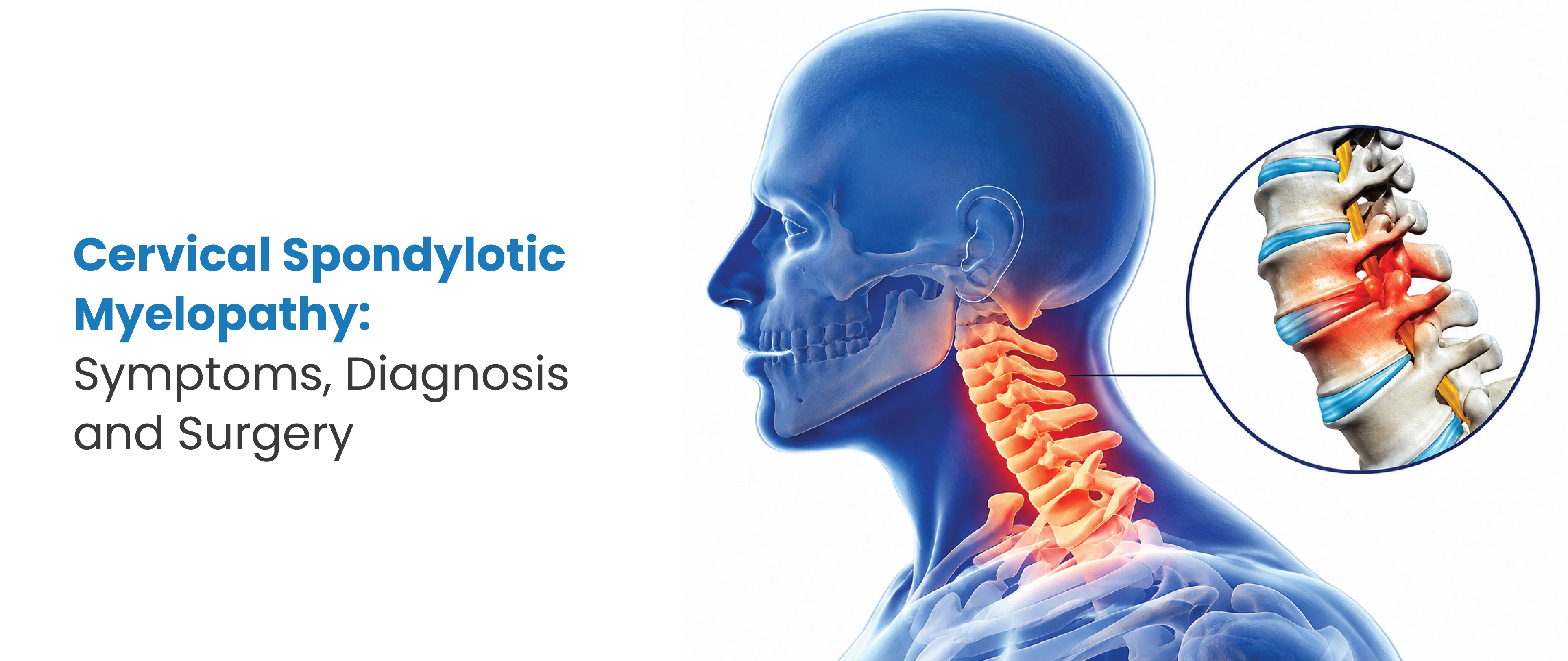
Cervical spondylotic myelopathy is the most common cause of spinal cord dysfunction in people over the age of 55. It is caused by age-related changes in the cervical spine that lead to spinal cord compression. This condition manifests as numbness, weakness of the upper limbs, impaired balance, and difficulties with walking. Moreover, if left untreated, irreversible changes in the spinal cord may develop. Cervical myelopathy treatment includes pharmacological therapy, physiotherapy, and surgery (e.g., ACDF surgery) to reduce spinal cord compression and improve the patient’s quality of life.
What Is Cervical Spondylotic Myelopathy?
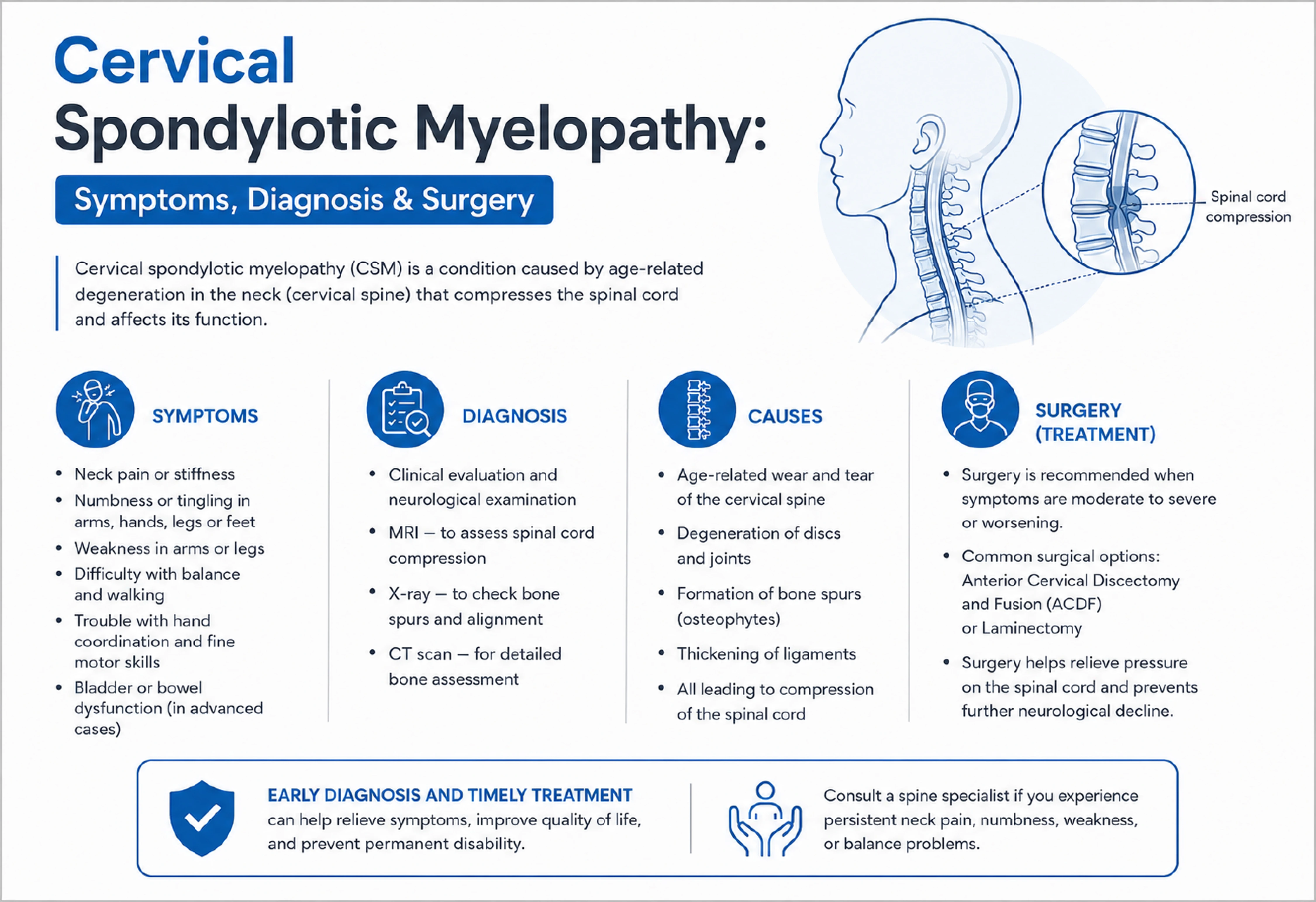
Cervical spondylotic myelopathy is a degenerative condition of the cervical spine that causes spinal cord compression. The development of this disease is associated with intervertebral disc narrowing, osteophyte formation, and thickening of spinal ligaments. Unlike a pinched nerve, spinal cord compression leads to disturbances of motor skills, coordination, sensation, and even bladder control. According to the American Association of Neurological Surgeons (AANS), this disease is among the most prevalent conditions causing spinal cord dysfunction in the elderly population.
Spinal cord compression develops as a result of the following pathological changes:
- Degenerative changes in the intervertebral discs
- Bone spurs (osteophytes)
- Thickening of the spinal ligaments
- Narrowing of the spinal canal (cervical spinal stenosis)
What Are Its Symptoms?
The symptoms develop gradually as a result of spinal cord compression. Common symptoms include:
- pain or stiffness in the neck,
- numbness or tingling in the hands,
- decreased grip strength,
- difficulty in buttoning clothes,
- impaired coordination,
- impaired balance,
- stiffness or weakness of the legs,
- frequent falls,
- and urinary or fecal incontinence (in severe cases).
Most patients associate these symptoms with the normal aging process and do not seek medical attention.
What Causes Cervical Myelopathy?
The primary cause is age-related degeneration of the cervical spine. Nevertheless, there are several risk factors that can contribute to the development of this disease. These include:
- age over 50,
- previous neck trauma,
- congenital spinal canal narrowing,
- neck overuse,
- smoking,
- and a family history of spinal degeneration.
How Is It Diagnosed?
The diagnosis is made by a physician based on a physical examination, particularly neurological tests. In addition, the following diagnostic tests are also indicated:
- Computed tomography (CT)
- magnetic resonance imaging (MRI),
- X-rays,
- dynamic X-rays of the cervical spine,
- and electromyography.
According to the AO Spine Clinical Practice Guidelines, MRI is the preferred method for diagnosing degenerative diseases of the cervical spine with spinal cord compression. Moreover, MRI is also indicated if there is suspicion of radiculopathy or myelopathy.
What Are the Treatment Options for Cervical Myelopathy?
Treatment may be either conservative or surgical, depending on the severity of the condition. The choice of the treatment modality depends on the severity of clinical manifestations, neurological signs, and radiographic findings.
Conservative treatment options are indicated for patients presenting with mild clinical manifestations of the disease. Conservative treatment options for cervical myelopathy include:
- physiotherapy,
- a course of analgesic therapy,
- and, if necessary, a short course of cervical immobilization.
However, it is noteworthy that conservative treatments cannot eliminate spinal cord compression.
On the other hand, surgical treatment options are indicated in patients with pronounced clinical manifestations of the disease, especially when radiological imaging reveals spinal cord compression. The purpose of surgery is to decompress the spinal cord and stabilize the spine.
What Is ACDF Surgery?
ACDF surgery (anterior cervical discectomy and fusion) is considered one of the most commonly used surgical procedures for treating spinal cord compression. During this surgery, the surgeon removes the herniated disc, eliminates pressure on the spinal cord and nerve roots, and stabilizes the spine. Thanks to minimally invasive techniques, many patients can begin taking short walks the day after surgery. However, the final recovery time depends on each patient’s health status.
Who Needs ACDF Surgery?
The indication for surgery is made by the spine surgeon and is determined based on the following factors:
- progressive weakness of the upper limbs,
- lack of coordination,
- difficulty walking,
- the presence of numbness,
- MRI findings of spinal cord compression,
- and failure of conservative treatments.
Recovery After Cervical Spine Surgery
The recovery period after cervical spine surgery depends on the patient’s age, the severity of the disease, the stage of the disease at the time of surgery initiation, and the surgeon’s expertise. Most surgeons recommend that their patients begin light physical activities several weeks after surgery. During the rehabilitation period, patients are also encouraged to attend physical therapy to restore their motor activity. Patients should also attend regular follow-up appointments with their spine surgeon and perform special neck exercises to facilitate recovery. As a result of timely and appropriate treatment, many patients are able to resume most daily activities within several months after surgery.
Can Cervical Spondylotic Myelopathy Be Prevented?
Since cervical spondylotic myelopathy results from natural age-related degeneration of the spine, it cannot be completely prevented. Nonetheless, there are certain measures that can help reduce the risk of developing this disease. These measures include maintaining good posture when working, being physically active, avoiding tobacco use, maintaining a healthy weight, and seeking medical attention promptly when experiencing symptoms of spinal cord compression or impaired balance. It is also important to take proper care of the spine by using special orthopaedic equipment at the workplace if necessary.
When Should You See a Spine Specialist?
If you notice that you have developed progressive weakness of the upper limbs, difficulties with walking, frequent falls, or numbness, you should consult a spine specialist as soon as possible. The timely diagnosis is essential for slowing down the disease progression and preventing irreversible spinal cord damage. If you have any concerns about your spine health, you should not hesitate to schedule an appointment with an experienced spine surgeon.
Consult a Spine Specialist Today
If you have persistent weakness or numbness in your upper limbs, have difficulties with walking or balancing, or have any other concerns about your spine health, you should contact an experienced spine surgeon. Our specialists will be able to provide you with high-quality care, conduct the necessary tests to determine the underlying cause of your discomfort, and develop an effective treatment strategy aimed at improving your quality of life and helping you return to your daily activities.
FAQs
Q1: What is the first symptom of cervical spondylotic myelopathy?
A: Early symptoms often include numbness in the hands, loss of hand dexterity, or difficulty performing fine motor tasks. Some patients also report that they started to have difficulties with walking and balance before developing severe neck pain.
Q2: Can cervical myelopathy be treated without surgery?
A: In some cases, it can be treated conservatively. However, conservative treatment options are only indicated for patients with mild disease manifestations.
Q3: How successful is ACDF surgery for treating cervical myelopathy?
A: ACDF surgery is generally considered a highly effective treatment for appropriately selected patients with cervical myelopathy.
Q4: Is it a medical emergency?
A: Although it is not usually a medical emergency, prompt evaluation by a spine specialist is recommended to prevent permanent spinal cord damage.
Q5: Can cervical spondylotic myelopathy recur after surgery?
A: Surgery only eliminates spinal cord compression at the surgically treated level; recurrent spinal cord dysfunction may occur if the disease affects other spinal regions.
 By -Dr Aaksha Shukla |
August 31, 2026 | 9 Min Read
By -Dr Aaksha Shukla |
August 31, 2026 | 9 Min Read
Advanced Neuro Rehabilitation for Cerebral Palsy & Brain Disorders
What Is Cerebral Palsy? Symptoms, Diagnosis & Treatment for Children
Febrile Seizures in Children: What Every Parent Should Know
Brain Aneurysm Treatment in Delhi NCR: Symptoms, Surgery & Recovery
Monsoon Migraine Triggers in 2026: Why Headaches Increase During the Rainy Season
Deep Brain Stimulation Surgery in Delhi for Parkinson’s Tremors
Spine Surgery in Delhi NCR: When is Surgery the Best Option?
Stroke Risk in Summer (2026): How Heat & Dehydration Affect the Brain
Minimally Invasive Brain Surgery: Benefits, Procedure & Recovery
Lower Back Pain: Causes, Symptoms & Non-Surgical Treatments
Slip Disc (Herniated Disc): Symptoms, Causes & Treatment Options
What Is Neuromodulation Therapy? Types, Benefits & How It Works
Headache Reasons: Causes of Left Side & Right Side Headache Explained
Home Remedies for Headache: 10 Natural Ways to Get Relief Fast
Parkinson’s Disease Treatment Hospital in India
Brain Stroke Treatment Hospital – Emergency Care
Stroke Paralysis Treatment Hospital – Advanced Neuro Care
Paralysis Treatment Hospital in India – Cost & Recovery
Brain Infection Symptoms, Causes, and When to Seek Emergency Care