



Book an Appointment
Call Us09958011121Monsoon Migraine Triggers in 2026: Why Headaches Increase During the Rainy Season
The rainy season often brings welcome relief from the scorching summer heat, but for many people, it can also bring an increase in migraine attacks.
If you are experiencing migraine attacks more often during rainy weather, you are not imagining it. Many individuals may experience migraines during the monsoon because abrupt weather changes can affect the brain, blood vessels, nerves, hydration levels, and even sleep quality.
Here is the tricky part: Monsoon headaches are rarely caused by just one thing. It is generally a “perfect storm” of triggers happening together — humidity, barometric pressure changes, dehydration, poor sleep, skipped meals, stress, and reduced sunlight.
That’s why some people feel migraine symptoms way before the rain actually starts.
In this guide, we will explain:
- Why Do Migraines Increase During the Rainy Season?
- The science behind weather-headache causes
- Symptoms to watch for
- How to know if it's a migraine or cluster headache?
- What is the best way to prevent migraines?
- When to consult a neurologist or a certified headache specialist in Delhi.
Let’s begin with the most important question.
Read Also: Understanding Migraine Pain: Causes and Management Tips
Why Does Migraine Increase During Monsoon?
The biggest reason is rapid atmospheric change.
Before rainfall, the atmosphere acts like a slowly tightening drum. Air pressure goes down, humidity goes up, winds shift, and temperature fluctuates. For sensitive brains, this can create neurological stress.
Although the exact relationship remains under investigation, several studies suggest that weather changes may influence...
- Blood vessel behavior
- Serotonin levels
- Trigeminal nerve sensitivity (the trigeminal nerve is the primary nerve involved in facial sensation and migraine pain).
- Stress response pathways
For people already prone to migraines, monsoon weather reduces the threshold required to trigger an attack.
Read Also: Home Remedies for Migraines: Your Ultimate Guide to Pain Relief
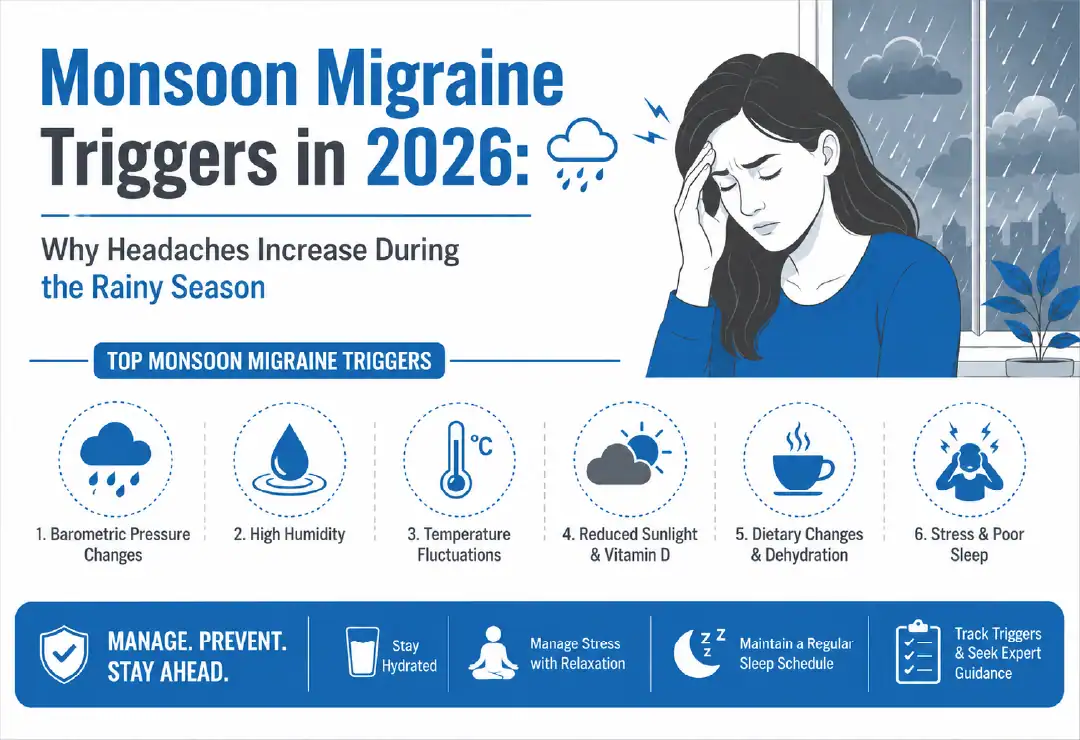
Common Monsoon Migraine Triggers
Here are the eight common weather headache causes during rainy season:
| Triggers | How It May Affect Migraine |
| Drop in barometric pressure | Can trigger nerve sensitivity and vascular changes |
| High humidity | Leads to fatigue and dehydration |
| Sudden temperature shifts | Disturbs body regulation mechanisms |
| Reduced sunlight | May affect serotonin and mood |
| Strong winds | Reported trigger in many migraine patients |
| Poor sleep during storms | Increases migraine frequency |
| Dehydration | Common even in humid weather |
| Skipped meals | Often worsens monsoon migraine |
You might think dehydration only occurs during summer heat. The truth is humid weather lowers sweat evaporation, making it harder for the body to cool itself effectively. You might still lose fluids without realizing it.
What Does a Monsoon Migraine Feel Like?
Migraine during monsoon is not “just a headache.” Symptoms may include:
- Throbbing head pain
- Pressure behind the eyes
- Nausea
- Vomiting
- Dizziness
- Sensitivity to light
- Sensitivity to sound
- Brain fog
- Neck stiffness
- Visual aura
- Fatigue
Some people even feel symptoms 24–48 hours before rainfall.
It is almost like your nervous system becomes an unofficial weather department.
Can Rain Really Trigger Migraine?
Yes, but indirectly.
Available research shows weather alone is usually not the sole trigger. Instead, weather combines with existing vulnerabilities.
Imagine a migraine like a glass slowly filling with water.
Stress adds water.
Poor sleep adds water.
Skipping meals adds water.
Then monsoon weather becomes the final drop that overflows the glass.
This explains why:
- One rainy day causes severe migraine
- Another rainy day causes nothing
The brain’s “trigger threshold” changes daily.
The Connection Between Barometric Pressure and Migraine
Barometric pressure is the weight of air pressing around us.
When storms approach, atmospheric pressure drops.
Some migraine researchers believe this pressure shift affects:
- Inner ear balance systems
- Blood vessels
- Trigeminal nerve pathways
- Pain processing centers
Your body behaves like a sealed water bottle during pressure changes. When outside pressure suddenly changes, the internal balance also reacts.
Sensitive nervous systems may interpret this as pain.
Migraine vs Cluster Headache During Monsoon
You might confuse migraines with cluster headache.
Here is a simple comparison:
| Feature | Migraine | Cluster Headache |
| Pain type | Throbbing/pulsating | Sharp, burning |
| Location | One or both sides | Usually one side around eye |
| Duration | 4–72 hours | 15 minutes to 3 hours |
| Associated symptoms | Nausea, aura, light sensitivity | Watery eye, nasal congestion |
| Weather trigger possible? | Yes | Sometimes |
| More common in | Women | Men |
Cluster headache attacks are usually shorter but extremely intense. Migraine attacks are longer and often involve multiple neurological symptoms.
If you experience recurring severe headaches during the monsoon, consult a headache specialist in Delhi for proper diagnosis.
Why Some People Are More Sensitive to Weather Changes
Not everyone reacts to monsoon the same way.
Possible reasons include the following:
1. Genetics
Migraine often runs in families.
2. Nervous System Sensitivity
Some brains process environmental changes more intensely.
3. Existing Migraine Disorder
People with chronic migraine have lower trigger thresholds.
4. Hormonal Factors
Hormonal fluctuations can amplify weather sensitivity.
5. Stress and Lifestyle
Sleep disruption, anxiety, and irregular routines increase susceptibility.
6 Monsoon Migraine Prevention Tips That Can Actually Help
You cannot stop the rain. But you can definitely reduce your brain’s sensitivity to weather changes.
1. Stay Hydrated
This is the simplest but most ignored step.
Drink water consistently throughout the day instead of waiting for thirst.
Add:
- Coconut water
- Electrolytes
- Lemon water
Especially if humidity makes you sweat more.
2. Track Weather and Migraine Together
Keep a migraine diary.
Record:
- Headache timing
- Rainfall
- Humidity
- Sleep
- Food
- Stress levels
Over time, patterns become clearer.
Many migraine patients notice attacks begin:
- Before storms
- During humidity spikes
- After sudden temperature changes
3. Maintain Consistent Sleep
The brain loves routine.
Late nights during rainy weather can significantly worsen migraine frequency.
Try to:
- Sleep at fixed hours
- Avoid screens before bed
- Reduce caffeine late evening
4. Avoid Trigger Foods During Monsoon
Certain foods may worsen migraine sensitivity.
Common triggers:
- Excess caffeine
- Processed meats
- MSG-heavy foods
- Aged cheese
- Alcohol
Artificial sweeteners
Not everyone reacts the same way, so identify personal triggers carefully.
5. Reduce Light and Noise Exposure
Storms often increase sensory sensitivity.
Helpful strategies:
- Use migraine glasses
- Lower screen brightness
- Rest in a dark room
- Use noise reduction if needed
6. Do Not Skip Meals
Rainy weather often disrupts schedules.
But long gaps between meals can trigger migraine rapidly.
Small, balanced meals help stabilize:
- Blood sugar
- Energy
- Brain function
When Should You See a Headache Specialist?
Occasional headaches during monsoon are common. But you should consult a headache specialist in Delhi or nearby if:
- Headaches occur more than 4 times monthly
- Pain affects work or daily life
- You experience aura symptoms
- Over-the-counter medicines stop working
- You develop dizziness or neurological symptoms
- Headaches suddenly worsen
Migraine is a neurologic disorder that not only causes headaches but often also a constellation of symptoms that can impact daily living. And it’s not simply “stress” or “weakness.”
Modern migraine treatments at leading health care centers like IBS Hospital now include:
- Preventive medications
- CGRP (Calcitonin Gene-Related Peptide)-targeted therapies
- Neuromodulation devices
- Lifestyle management plans
- Rescue medications
Early treatment improves long-term quality of life significantly.
Can Weather Apps Help Prevent Migraine?
Yes, for some people.
Many patients monitor:
- Humidity
- Rainfall
- Pressure changes
Weather tracking helps you prepare in advance.
If you know storms trigger migraines, you can:
- Sleep early
- Stay hydrated
- Avoid extra triggers
- Keep rescue medication nearby
Think of it like carrying an umbrella before the rain starts.
People Also Ask
Can monsoon really cause migraine?
Monsoon itself may not directly cause migraine, but weather changes like humidity, pressure drops, and temperature fluctuations can trigger attacks in sensitive individuals.
Why do headaches worsen before rain?
Before rainfall, barometric pressure often decreases. Some migraine patients are highly sensitive to these atmospheric shifts.
Is migraine during monsoon dangerous?
Most migraines are not dangerous, but severe or unusual headaches should always be evaluated by a medical professional.
Can humidity trigger headaches?
Yes. High humidity may contribute to dehydration, fatigue, and nervous system stress, increasing headache risk.
What is the best way to prevent weather-triggered migraine?
The best strategy combines:
- Hydration
- Consistent sleep
- Trigger management
- Stress reduction
- Early medication use if prescribed
Conclusion
Migraine during monsoon feels frustrating because the trigger seems impossible to control.
You cannot stop storms from coming. But understanding your patterns can make a significant difference. Weather may load the gun, but lifestyle factors often pull the trigger.
The goal is not to create a perfectly trigger-free life because this is so unrealistic. The goal is to raise your brain’s resilience so weather changes no longer dominate your daily routine.
If rainy season headaches are becoming frequent, disruptive, or severe, consulting a headache specialist in Delhi can help you build a long-term migraine management plan tailored to your triggers and symptoms.
If migraine attacks are becoming frequent or affecting your quality of life, consulting a specialist can help identify triggers and develop an effective treatment plan.
You can contact the IBS Hospital at +91 9958011121.
Our Address: IBS Hospitals, 73 Ring Road, Lajpat Nagar III, New Delhi – 110024, India
Our Experts:
- Dr. Kishan Raj, over 18 years of experience
- Dr. Sanjay Kumar Choudhary, over 25 years of experience
FAQs
Q: How to get rid of a barometric migraine?
A: Take triptans or gepants early if prescribed, rest in a dark room, stay hydrated, use a cool compress, and maintain consistent sleep/meals to counteract pressure-induced nerve sensitivity.
 By -Dr Aaksha Shukla |
June 16, 2026 | 9 Min Read
By -Dr Aaksha Shukla |
June 16, 2026 | 9 Min Read
Cervical Spondylotic Myelopathy: Symptoms, Diagnosis & Surgery
Advanced Neuro Rehabilitation for Cerebral Palsy & Brain Disorders
What Is Cerebral Palsy? Symptoms, Diagnosis & Treatment for Children
Febrile Seizures in Children: What Every Parent Should Know
Brain Aneurysm Treatment in Delhi NCR: Symptoms, Surgery & Recovery
Deep Brain Stimulation Surgery in Delhi for Parkinson’s Tremors
Spine Surgery in Delhi NCR: When is Surgery the Best Option?
Stroke Risk in Summer (2026): How Heat & Dehydration Affect the Brain
Minimally Invasive Brain Surgery: Benefits, Procedure & Recovery
Lower Back Pain: Causes, Symptoms & Non-Surgical Treatments
Slip Disc (Herniated Disc): Symptoms, Causes & Treatment Options
What Is Neuromodulation Therapy? Types, Benefits & How It Works
Headache Reasons: Causes of Left Side & Right Side Headache Explained
Home Remedies for Headache: 10 Natural Ways to Get Relief Fast
Parkinson’s Disease Treatment Hospital in India
Brain Stroke Treatment Hospital – Emergency Care
Stroke Paralysis Treatment Hospital – Advanced Neuro Care
Paralysis Treatment Hospital in India – Cost & Recovery
Brain Infection Symptoms, Causes, and When to Seek Emergency Care