
Book an Appointment
Call Us09958011121Deep Brain Stimulation Surgery in Delhi for Parkinson’s Tremors
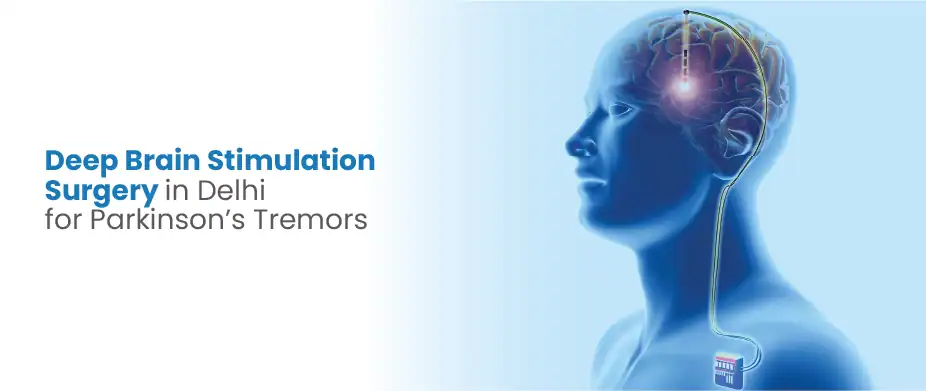
Deep brain stimulation (DBS) is an essential treatment for selected people with Parkinson’s disease. It involves implanting electrodes within the areas of the brain and works by sending small electrical pulses to a specific area deep in the brain.
These pulses help calm abnormal brain signals, interrupt harmful firing patterns, and restore more normal brain activity. As a result, DBS helps lower symptoms like tremors, stiffness, and slow movement.
As of 2019, experts speculate that approximately 160,000 individuals have undergone DBS implantation since the 1980s. They also estimate that around 12,000 procedures happen annually.
DBS surgery is one of the most advanced procedures that is available in healthcare centers in Delhi, like IBS Hospital, and experts there are now helping patients regain control.
At IBS, there are many success stories that can inspire you. One such example is Mr. Kamil Ibrahim Jasim, who was able to regain independence in his life with the help of Deep Brain Stimulation.
What is Deep Brain Stimulation (DBS) for Parkinson’s?
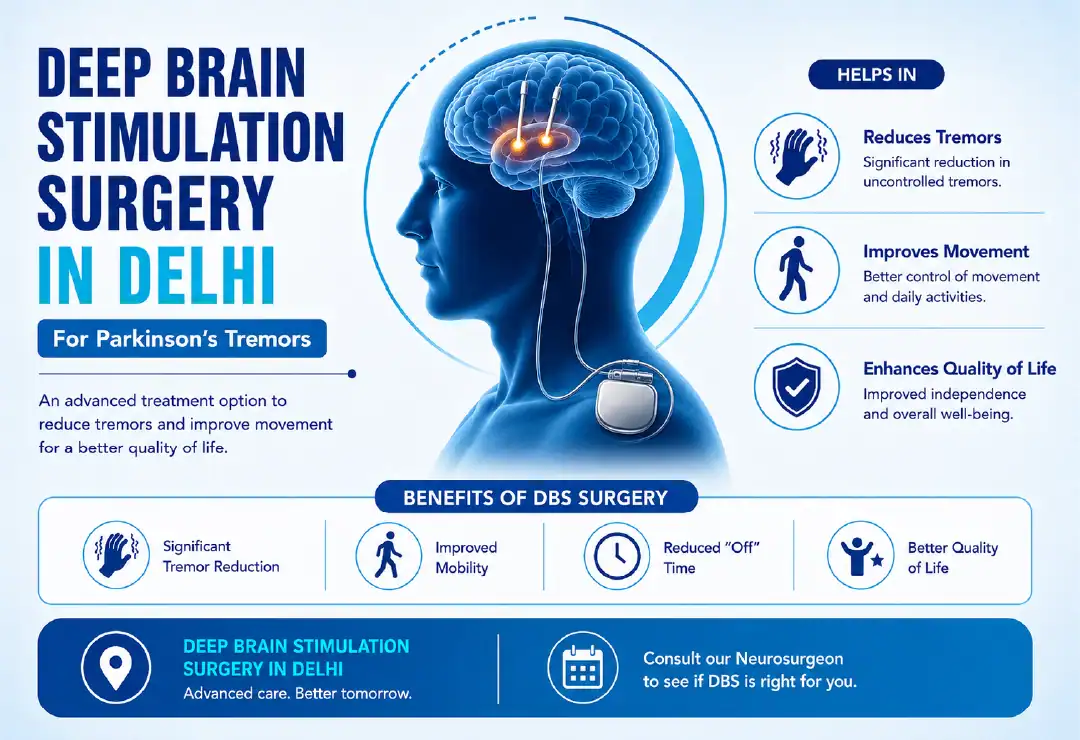
Deep Brain Stimulation is a functional neurosurgery where doctors place electrodes deep inside the brain. These electrodes are connected to a small device (like a “brain pacemaker”) placed in the chest.
Think of it like this: If Parkinson’s is a “faulty rhythm in the brain orchestra,” DBS may act like a conductor bringing the rhythm back into balance.
Instead of removing brain tissue, DBS modulates abnormal signals, especially in tremor-related circuits.
Other Conditions that Might Benefit from DBS Include:
- Cluster headaches
- Eating disorders
- Schizophrenia
- Addictions
- Alzheimer’s disease
- Anxiety
- Severe pain disorders (especially pain that happens because of nerve or brain conditions, or pain from incurable diseases like cancer)
- Severe, medication-resistant depression
- Tourette syndrome
Note: DBS doesn't cure conditions that it treats. However, under proper professional guidance, it helps maintain the symptoms effectively.
Read Also: How Long Does Deep Brain Stimulation Surgery Take?
Why is DBS Becoming More Popular in Delhi?
Delhi has become a major center for advanced neurological care because:
- Availability of high-resolution MRI + brain mapping
- Experienced movement disorder neurologists
- Advanced DBS programming systems
- Increasing awareness of Parkinson’s surgical treatments
- Multi-disciplinary teams (neurology + neurosurgery + rehab)
Read Also: What Is The Role Of The Neurologist In DBS Surgery?
Who Actually Needs DBS Surgery?
Not every Parkinson’s patient needs DBS. A neurosurgeon is usually recommended when:
- Tremors are not controlled by medicines
- Medication effects fluctuate (“on-off” phenomenon)
- High doses of levodopa cause side effects
- Tremor affects daily activities like eating, writing, or walking
- Disease is still responsive to dopamine therapy
Who is a Good Candidate for DBS Surgery?
Determining deep brain stimulation candidacy is a rigorous, highly specialized process. It requires a multidisciplinary evaluation to ensure the benefits outweigh the risks
Here is the Quick Eligibility Snapshot for You
| Factor | DBS Suitable? | Explanation |
| Tremor not controlled by medicine | Yes | Common indication |
| Severe cognitive decline | No | Risk of worsening confusion |
| Good response to levodopa | Yes | Predicts good DBS outcome |
| Very early Parkinson’s | Usually no | Medicines preferred first |
| Severe psychiatric illness | Case-dependent | Needs evaluation |
Read Also: Deep Brain Stimulation Surgery Cost in India
How DBS Surgery Actually Works (Simple Step-by-Step)
DBS surgery involves a planned process in stages, such as:
1. Pre-surgery Brain Mapping
Doctors use MRI and sometimes diffusion imaging to identify targets like:
- Subthalamic nucleus (STN)
- Globus pallidus internus (GPi)
- Thalamic regions (VIM)
2. Electrode Implantation
A thin electrode is placed deep in the brain using a stereotactic frame for accuracy.
3. Chest Device Implantation
A pulse generator (like a pacemaker) is placed under the skin near the collarbone.
4. Programming Phase
After surgery, neurologists “tune” the device settings for best tremor control.
Read Also: What is the Recovery Time for DBS Surgery?
Target Brain Areas Used in DBS (Important For Understanding Results)
Different brain targets = different symptom control.
| DBS Target | Possible Benefit | Best For | Limitations |
| STN (Subthalamic nucleus) | Tremor + stiffness improvement | Most Parkinson’s cases | Mood/cognitive side effects possible |
| GPi (Globus pallidus internus) | Reduces dyskinesia | Older patients | Less medication reduction |
| VIM (Thalamus) | Strong tremor control | Tremor-dominant Parkinson’s | Does not help rigidity much |
What Makes DBS Effective for Tremors?
Parkinson’s tremors happen because of abnormal electrical firing loops between brain regions.
DBS helps by:
- Interrupting abnormal tremor circuits
- Stabilizing neural firing patterns
- Reducing “beta wave” overactivity
- Improving motor signal flow to muscles
For example: It is like reducing “static noise” in a radio so the music (movement signals) becomes clear again.
What is Life Like After DBS Surgery?
Most individuals do not experience immediate results. The results or improvement may vary based on individual factors.
- First few weeks = healing phase
- Programming sessions = fine-tuning phase
- 1–3 months = noticeable tremor reduction
- The medication dose often reduced gradually
Expected Improvements After DBS
| Symptom | Improvement Level |
| Tremors | High |
| Rigidity | High |
| Slowness of movement | Moderate to high |
| Medication dependency | Reduced |
| Speech issues | Variable (sometimes worsens slightly) |
Risks & Side Effects
DBS, a minimally invasive procedure, is generally safe when done in experienced centers, but like any other medical procedure, risks exist:
- Infection at the implant site
- Bleeding in the brain (rare but serious)
- Temporary confusion after surgery
- Speech or balance changes
- Device-related discomfort
However, most side effects are manageable with programming adjustments.
DBS Surgery in Delhi: What Patients Should Expect
Delhi hospitals like IBS, offering DBS, typically follow a structured pathway:
- Neurology assessment
- Psychological evaluation
- MRI + brain mapping
- Surgical planning conference
- DBS implantation (staged surgery)
- Long-term follow-up programming
Typical DBS Treatment Timeline in Delhi
Here is an approximate timeline for your general idea:
| Phase | Approximate Duration | What Happens |
| Evaluation | 3–7 days | Tests + eligibility check |
| Surgery | 1–2 days | Electrode + device implantation |
| Hospital stay | 5–7 days | Recovery monitoring |
| Programming | 2–6 weeks | Device adjustment |
| Follow-up | Long-term | Optimization |
How Much Does DBS Surgery Cost in Delhi?
Costs vary depending on hospital, device type, and complexity.
- Standard DBS system: ₹12–20 lakh range
- Advanced rechargeable systems: higher cost
- Follow-up programming: ongoing but lower cost
Insurance coverage may apply in selected cases.
Read Also: All you need to know about Deep Brain Stimulation
Who Gets the Best Results from DBS?
Results vary based on individual factors, but DBS works best when:
- Parkinson’s is in a moderate or advanced stage
- Patient still responds to levodopa
- Tremor is disabling, but brain cognition is intact
- There is a strong support system for follow-up care
Future of DBS: Why it’s Changing Fast
DBS is no longer just “constant stimulation.” New systems are emerging:
- Adaptive DBS (responds to brain signals in real time)
- AI-assisted programming
- Closed-loop stimulation systems
- Better imaging-based targeting (tractography-based DBS)
This means DBS is becoming more like a smart brain regulator rather than a fixed device.
Conclusion
Deep brain stimulation surgery in Delhi for Parkinson’s is a highly specialized treatment that helps many individuals manage symptoms effectively.
However, it is important to understand that DBS doesn't cure conditions that it treats. It does treat the symptoms, but virtually all of the conditions that it treats are lifelong and not curable. Hence, follow your doctor's advice for the best treatment outcome.
Looking for Parkinson's treatment in Delhi? Contact the IBS hospital, known for advanced technologies and innovative surgical procedures, and its multidisciplinary team specializing in neurological conditions.
You can contact the IBS Hospital at +91 9958011121.
Our Address: IBS Hospital, 73 Ring Road, Lajpat Nagar III, New Delhi – 110024, India
Our Experts:
FAQs
Q1: How painful is DBS surgery?
A: DBS surgery is performed under anesthesia, so patients feel no pain during the procedure. Post-surgery, mild headache, swelling, or discomfort at implant sites is common and manageable with prescribed medications
Q2: How long does DBS last?
Non-rechargeable DBS batteries last 3–6 years; rechargeable ones last up to 15 years. Electrodes can function for decades, but the neurostimulator must be replaced when battery life ends.
 By -Dr Aaksha Shukla |
June 10, 2026 | 9 Min Read
By -Dr Aaksha Shukla |
June 10, 2026 | 9 Min Read
Cervical Spondylotic Myelopathy: Symptoms, Diagnosis & Surgery
Advanced Neuro Rehabilitation for Cerebral Palsy & Brain Disorders
What Is Cerebral Palsy? Symptoms, Diagnosis & Treatment for Children
Febrile Seizures in Children: What Every Parent Should Know
Brain Aneurysm Treatment in Delhi NCR: Symptoms, Surgery & Recovery
Monsoon Migraine Triggers in 2026: Why Headaches Increase During the Rainy Season
Spine Surgery in Delhi NCR: When is Surgery the Best Option?
Stroke Risk in Summer (2026): How Heat & Dehydration Affect the Brain
Minimally Invasive Brain Surgery: Benefits, Procedure & Recovery
Lower Back Pain: Causes, Symptoms & Non-Surgical Treatments
Slip Disc (Herniated Disc): Symptoms, Causes & Treatment Options
What Is Neuromodulation Therapy? Types, Benefits & How It Works
Headache Reasons: Causes of Left Side & Right Side Headache Explained
Home Remedies for Headache: 10 Natural Ways to Get Relief Fast
Parkinson’s Disease Treatment Hospital in India
Brain Stroke Treatment Hospital – Emergency Care
Stroke Paralysis Treatment Hospital – Advanced Neuro Care
Paralysis Treatment Hospital in India – Cost & Recovery
Brain Infection Symptoms, Causes, and When to Seek Emergency Care