
Book an Appointment
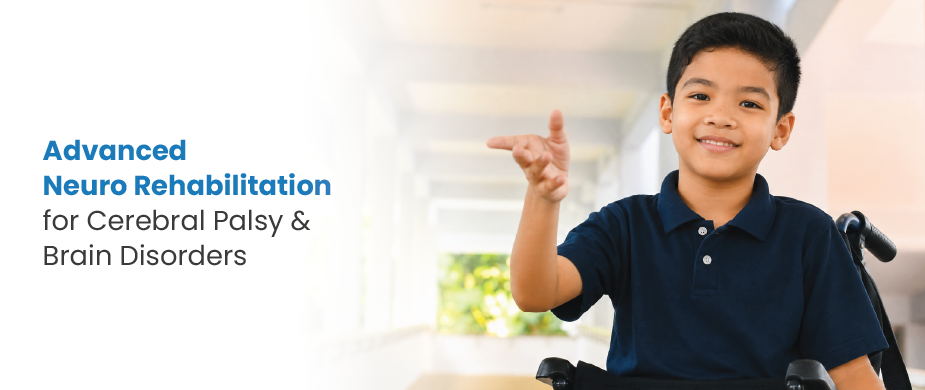
Call Us09958011121Advanced Neuro Rehabilitation for Cerebral Palsy & Brain Disorders
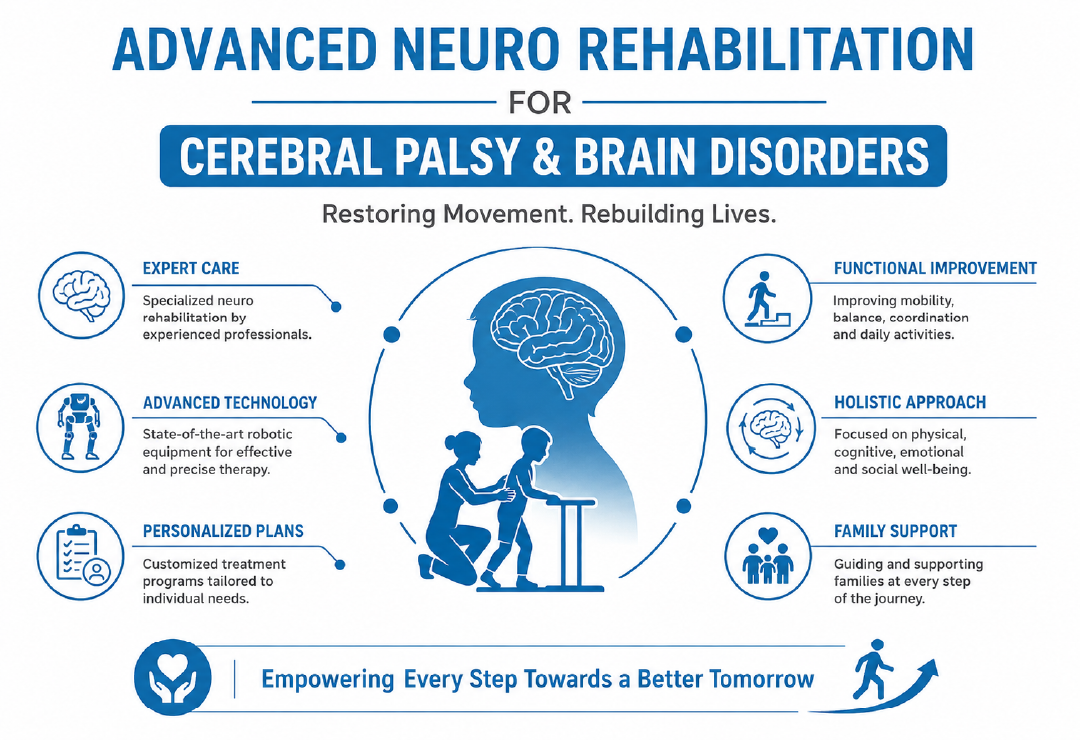
Individuals living with cerebral palsy, stroke, traumatic brain injury or other neurological conditions may benefit from neuro rehabilitation in Delhi. Unlike one-size-fits-all treatment, this form of rehabilitation is individualized and can involve a range of therapeutic and medical interventions to address movement, physiotherapy, occupation, speech and other functions. The WHO defines rehabilitation as a coordinated set of interventions to optimize functioning and reduce disability.
What Is Advanced Neuro Rehabilitation in Delhi?
Advanced neuro rehabilitation refers to a coordinated programme of treatment that is focused on an individual’s neurological condition and functional requirements. It may be suitable for children, adolescents or adults who have acquired a neurological condition, for example following brain injury, spinal cord injury or other diseases affecting the brain and nervous system.
An individual’s rehabilitation programme could include interventions to support:
- Weak muscles or abnormal muscle tone
- Balance, posture and coordination
- Walking, mobility and functional movement
- Hand function and fine motor skills
- Speech, language and swallowing
- Thinking, behaviour and cognition
- Self-care, home living and community living
How Can Cerebral Palsy Rehabilitation Improve Daily Functioning?
Cerebral palsy is a chronic neurological condition that can benefit from rehabilitation at any age. Even though the condition itself cannot be cured, the right combination of therapy and treatments can help an individual acquire, restore or maintain function. This could include working on gross motor skills, fine motor skills, speech and language, self-care, self-management, and other areas of concern.
Rehabilitation program recommends a multidisciplinary approach to managing cerebral palsy in children and young people. This involves physiotherapists, occupational therapists, speech and language therapists, dietitians and psychologists, depending on an individual’s particular combination of needs.
An individualised programme could include:
Movement and mobility
Physiotherapists can work on posture, balance, muscle strength and flexibility to enable greater mobility and participation in daily activities. Physiotherapy for cerebral palsy could include task-specific training, stretching, strengthening exercises and gait training, depending on an individual’s functional needs.
Tailored approach to physical therapy for children and young people with spasticity, to achieve goals such as improved function and participation while minimizing complications.
Daily living skills and hand function
Occupational therapy can help people live more independently by working on their ability to perform tasks and activities that are affected by their condition. This could include dressing, eating, handwriting, grasping objects, personal care and participating in work or study. An occupational therapist might also advise on adaptations or equipment that can help maximize independence and safety.
Communication and swallowing
Some neurological conditions can affect an individual’s ability to communicate and swallow. A speech and language therapist can provide assessments and interventions to maximize communication potential and address related difficulties, such as swallowing or feeding. In children, assessing a child’s communication needs and ability as early as possible and offering communication support if needed.
What types of brain conditions can benefit from neuro rehabilitation?
Depending on the individual’s particular condition, unique challenges, a neuro rehabilitation programme could include a range of treatments and interventions to maximize mobility, communication, occupation and other functions.
Different neurological conditions may require different rehabilitation approaches. The table below outlines common conditions and their rehabilitation focus.
| Neurological condition | Rehabilitation focus |
| Cerebral palsy | Movement, posture, communication, participation and independence |
| Stroke | Walking, balance, upper limb movement and daily living skills |
| Brain injury | Physical, cognitive and functional restoration |
| Spinal cord injury | Mobility, transfers and walking function |
| Parkinson’s disease | Movement, balance and daily living skills |
| Other neurological conditions | Tailored to individual’s needs |
According to the WHO’s framework for neurological rehabilitation, people with cerebral palsy, stroke, Parkinson’s disease, traumatic brain injury and spinal cord injury can benefit from rehabilitation interventions.
What makes a programme advanced?
For people considering neuro rehabilitation in Delhi, an advanced programme should focus on individualized assessment and measurable functional goals rather than simply the availability of sophisticated equipment.
An advanced rehabilitation programme is not defined by the use of advanced equipment, but rather the ability to offer targeted, goal-oriented treatment and interventions.
This could include an initial assessment, specialized rehabilitation goals, tailored movement and walking training, balance and mobility assessments, upper limb and fine motor skills training, the use of assistive technology or orthoses as needed, and guidance on activities at home.
The importance of choosing the right programme
In choosing a rehabilitation programme, it can be helpful to ask questions about the range of treatment options offered, rather than looking for a facility offering the most equipment or therapeutic approaches. Choosing neuro rehabilitation in Delhi involves finding an individualized programme that addresses the person’s specific needs and may offer the following:
- Multidisciplinary assessment and intervention
- Tailored goals
- Child and family focused care, for paediatric cases
- Regular monitoring and reassessment
- Orthotics, assistive technology and mobility equipment, as needed
- Family and caregiver training and guidance
- Co-management with neurologists, paediatricians, orthopaedic surgeons and other specialists, for complex cases
The right programme will be determined by an individual’s particular condition, personal objectives, rather than a standardized list of interventions.
Why early and continued rehabilitation is important
Rehabilitation can be particularly beneficial during the early stages of diagnosis, when an individual’s functional capacity and independence can be optimized. However, every individual is different and the timing and frequency of rehabilitation will depend on their particular needs. A rehabilitation programme can help an individual maximize their potential and maintain their independence, for example in pursuing work, study, family activities and other aspects of daily life.
For children with cerebral palsy, multidisciplinary rehabilitation with targeted interventions and treatment planning has been shown to have benefits across their development and into adulthood. In such cases, family members should be involved in the assessment and decision-making process regarding their carer’s rehabilitation needs.
Get Expert Neuro Rehabilitation Support in Delhi
Whether you are seeking support for cerebral palsy, stroke, traumatic brain injury, Parkinson's disease or another neurological condition, a personalized rehabilitation programme can help maximize independence and quality of life. If you are looking for neuro rehabilitation in Delhi, consult an experienced rehabilitation specialist to determine the most appropriate treatment plan based on the individual’s condition, functional needs and goals.
FAQs
Q1: Can cerebral palsy be cured?
A: Rehabilitation is aimed at maximizing functioning and independence, but it cannot cure cerebral palsy. However, it can help manage symptoms, improve functional abilities and enhance quality of life. Cerebral palsy is a life-long condition that requires ongoing management.
Q2: How often should my child have therapy?
A: The frequency of treatment will depend on an individual’s functional needs and goals, which should be discussed as part of an initial assessment. Every child is different and a personalized treatment plan should be created in collaboration with qualified therapists.
Q3: Can rehabilitation help following a brain injury?
A: Yes, an individual who has experienced a brain injury can benefit from an individualized neuro rehabilitation programme, depending on their particular functional limitations and goals.
Q4: What is the role of occupational therapy in neuro rehabilitation?
A: An occupational therapist working with someone with a neurological condition can help maximize their ability to perform tasks and activities, such as personal care, eating and handwriting, and support them to live independently. They can also advise on modifications to maximize independence and safety.
Q5: When should we seek specialist rehabilitation?
A: If a child or an adult presents with a neurological condition affecting their movement, speech, behaviour, cognition or ability to perform activities of daily living, they should be assessed by a qualified specialist to identify the most appropriate type of rehabilitation for their particular needs.
 By -Dr Aaksha Shukla |
August 31, 2026 | 9 Min Read
By -Dr Aaksha Shukla |
August 31, 2026 | 9 Min Read
Cervical Spondylotic Myelopathy: Symptoms, Diagnosis & Surgery
What Is Cerebral Palsy? Symptoms, Diagnosis & Treatment for Children
Febrile Seizures in Children: What Every Parent Should Know
Brain Aneurysm Treatment in Delhi NCR: Symptoms, Surgery & Recovery
Monsoon Migraine Triggers in 2026: Why Headaches Increase During the Rainy Season
Deep Brain Stimulation Surgery in Delhi for Parkinson’s Tremors
Spine Surgery in Delhi NCR: When is Surgery the Best Option?
Stroke Risk in Summer (2026): How Heat & Dehydration Affect the Brain
Minimally Invasive Brain Surgery: Benefits, Procedure & Recovery
Lower Back Pain: Causes, Symptoms & Non-Surgical Treatments
Slip Disc (Herniated Disc): Symptoms, Causes & Treatment Options
What Is Neuromodulation Therapy? Types, Benefits & How It Works
Headache Reasons: Causes of Left Side & Right Side Headache Explained
Home Remedies for Headache: 10 Natural Ways to Get Relief Fast
Parkinson’s Disease Treatment Hospital in India
Brain Stroke Treatment Hospital – Emergency Care
Stroke Paralysis Treatment Hospital – Advanced Neuro Care
Paralysis Treatment Hospital in India – Cost & Recovery
Brain Infection Symptoms, Causes, and When to Seek Emergency Care